E-commerce development services for stores that convert and scale
CogniCrew AI Solutions builds custom storefronts, checkout flows, and commerce integrations so catalog, payments, and fulfillment work as one reliable growth system for your online business.
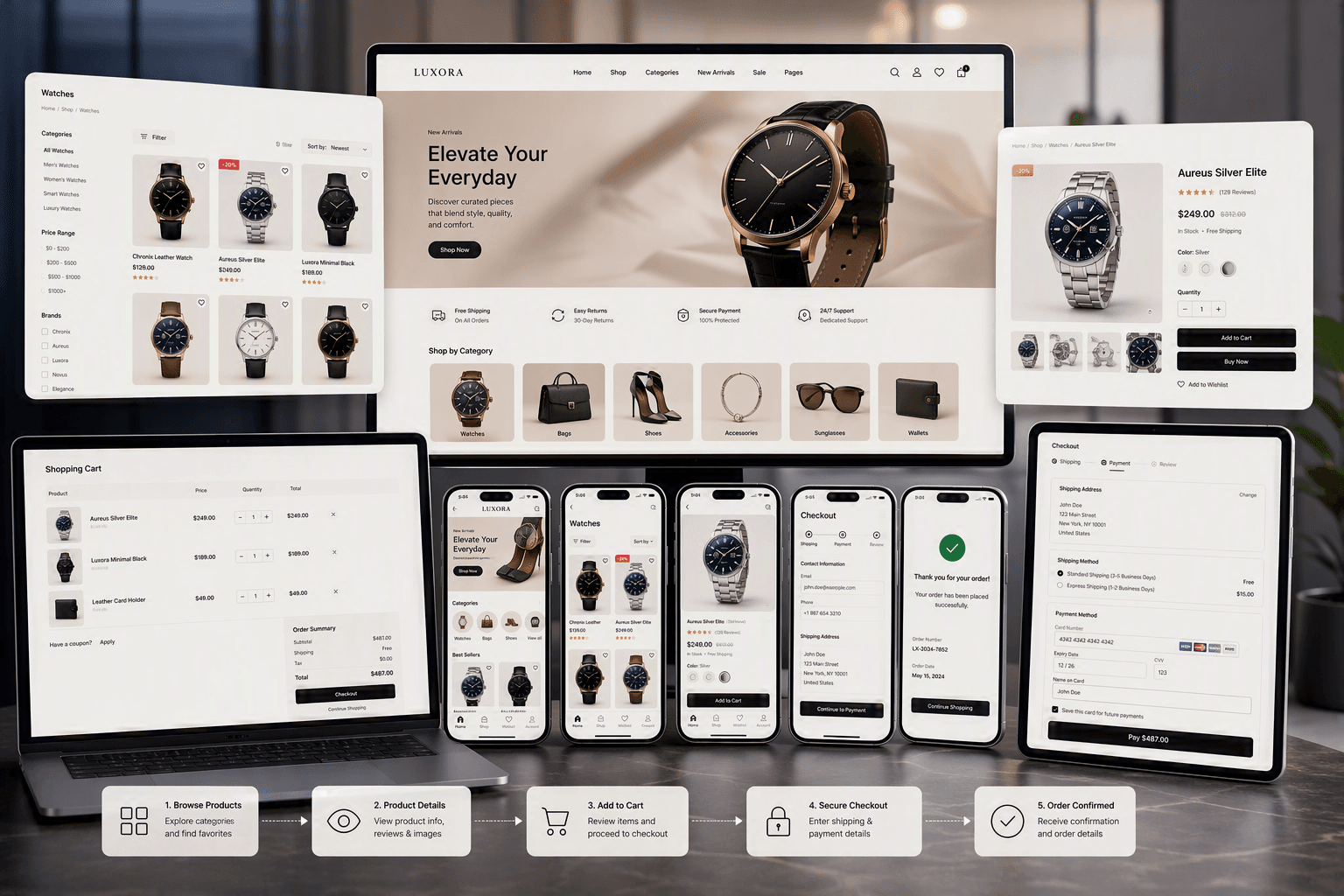
Service overview
An online store needs more than product pages. It needs fast browsing, trustworthy checkout, accurate inventory, and operations systems that keep orders moving after purchase.
Our e-commerce development services cover custom storefronts, payment integrations, catalog architecture, order workflows, and third-party connections for shipping, ERP, and CRM tools.
We help brands launch new stores, rebuild outdated platforms, and add custom commerce logic that off-the-shelf themes cannot support cleanly.
Problems this service solves
Commerce bottlenecks that reduce revenue and create operational chaos.
When to choose this
A quick fit check before you book a call—so we spend time on the right engagement model.
- Brands launching a new online store or rebuilding an outdated one
- Teams needing custom commerce logic beyond theme limitations
- Retailers connecting catalog, payments, and fulfillment systems
What we deliver
Practical outcomes designed to support growth, quality, and long-term product health.
E-commerce development capabilities
We design and build the customer experience and the systems behind it so revenue and operations stay aligned.
Custom storefront development
Build brand-aligned shopping experiences with strong product discovery, navigation, and merchandising support.
Cart and checkout optimization
Reduce drop-off with streamlined carts, guest checkout options, and clearer purchase confirmation flows.
Payments and subscriptions
Integrate payment gateways, wallets, and recurring billing where your commerce model needs them.
Catalog and inventory systems
Support variants, stock rules, pricing logic, and product data structures that scale with your assortment.
Order and fulfillment integrations
Connect orders to shipping, ERP, CRM, and warehouse tools so operations stay visible after checkout.
Performance and conversion tuning
Improve page speed, search, recommendations, and merchandising so traffic turns into revenue.
Where e-commerce development creates impact
Common commerce builds where custom development outperforms generic store setups.
Launch a high-quality online store with catalog, checkout, payments, and mobile shopping ready for growth.
Replace a slow or inflexible platform with a modern commerce experience that supports campaigns and operations.
Decouple storefront and backend systems when you need flexibility across web, mobile, and channel experiences.
Handle variants, pricing rules, account-based buying, or integration-heavy workflows beyond simple retail themes.
Who this is for
Brands and operators that need commerce systems built for both buyers and operations.
Typical deliverables
Quick facts
- Engagement model
- Scoped build with phased releases
- Typical timeline
- 8–16 weeks for focused launches
- Primary focus
- Conversion, reliability, and operations fit
- Best paired with
- UI/UX design and digital marketing
We start by mapping catalog structure, checkout needs, payment options, and operational integrations. Delivery then moves in phases that protect launch timelines and keep stakeholders aligned.
Integrations and conversion quality are planned early so the store is usable for buyers and operations from day one, with room to optimize after launch.
Improve conversion with digital marketingHow we build e-commerce platforms
Discovery, architecture, iterative delivery, and launch hardening keep commerce projects grounded in revenue outcomes.
Commerce discovery
Define catalog structure, checkout needs, payment options, and operational integrations.
Architecture and UX
Align storefront flows and system design before major build work begins.
Build and integrate
Implement storefront, payments, inventory, and third-party connections in measurable releases.
Launch and optimize
Harden for launch, then improve conversion and performance with real traffic data.
Why choose CogniCrew AI Solutions for e-commerce development
We build commerce products with both customer conversion and backend operations in mind.
Design and engineering decisions prioritize product discovery, trust, and checkout completion.
Payments, shipping, ERP, and CRM connections are planned as part of the core build.
Product data structures are built to grow with variants, channels, and merchandising needs.
We leave room for performance tuning, CRO, and campaign-driven iteration after go-live.
Case studies related to E-commerce Development
Real projects that show how this kind of work ships in production.
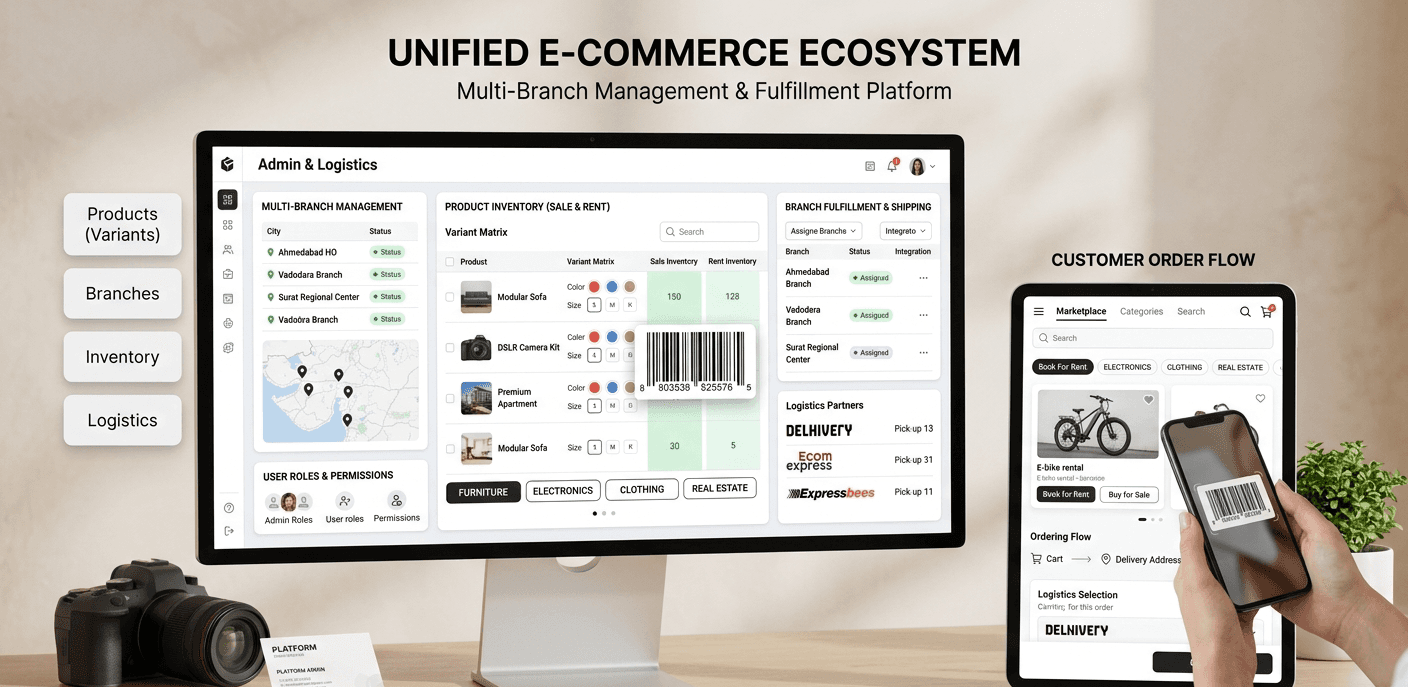
A web and mobile commerce platform for vendor onboarding, shared inventory, sales, and rental operations with barcode-backed stock tracking.
Read case study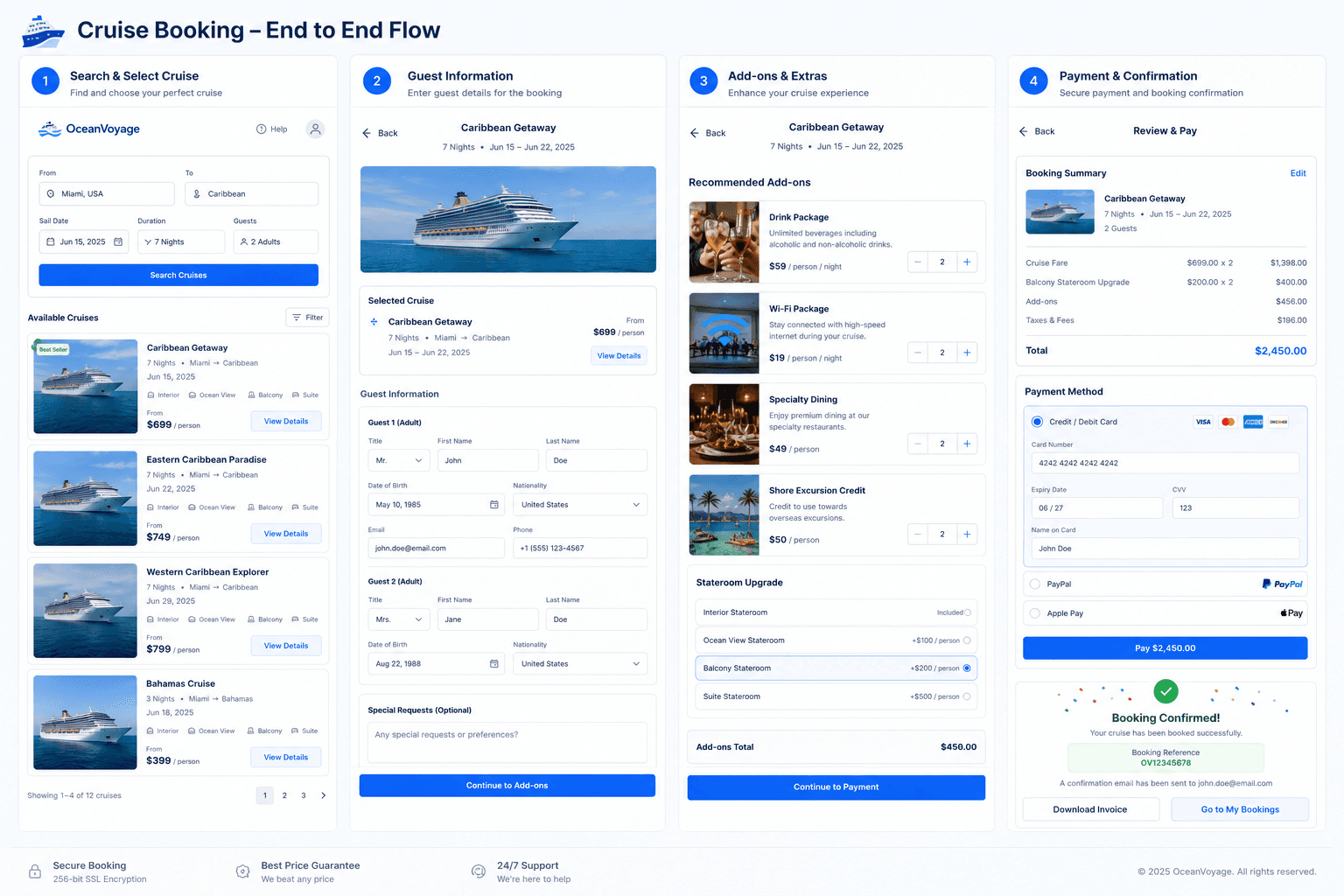
An end-to-end cruise booking web and mobile application for browsing itineraries, comparing cabins, managing guest profiles, and completing secure reservations.
Read case study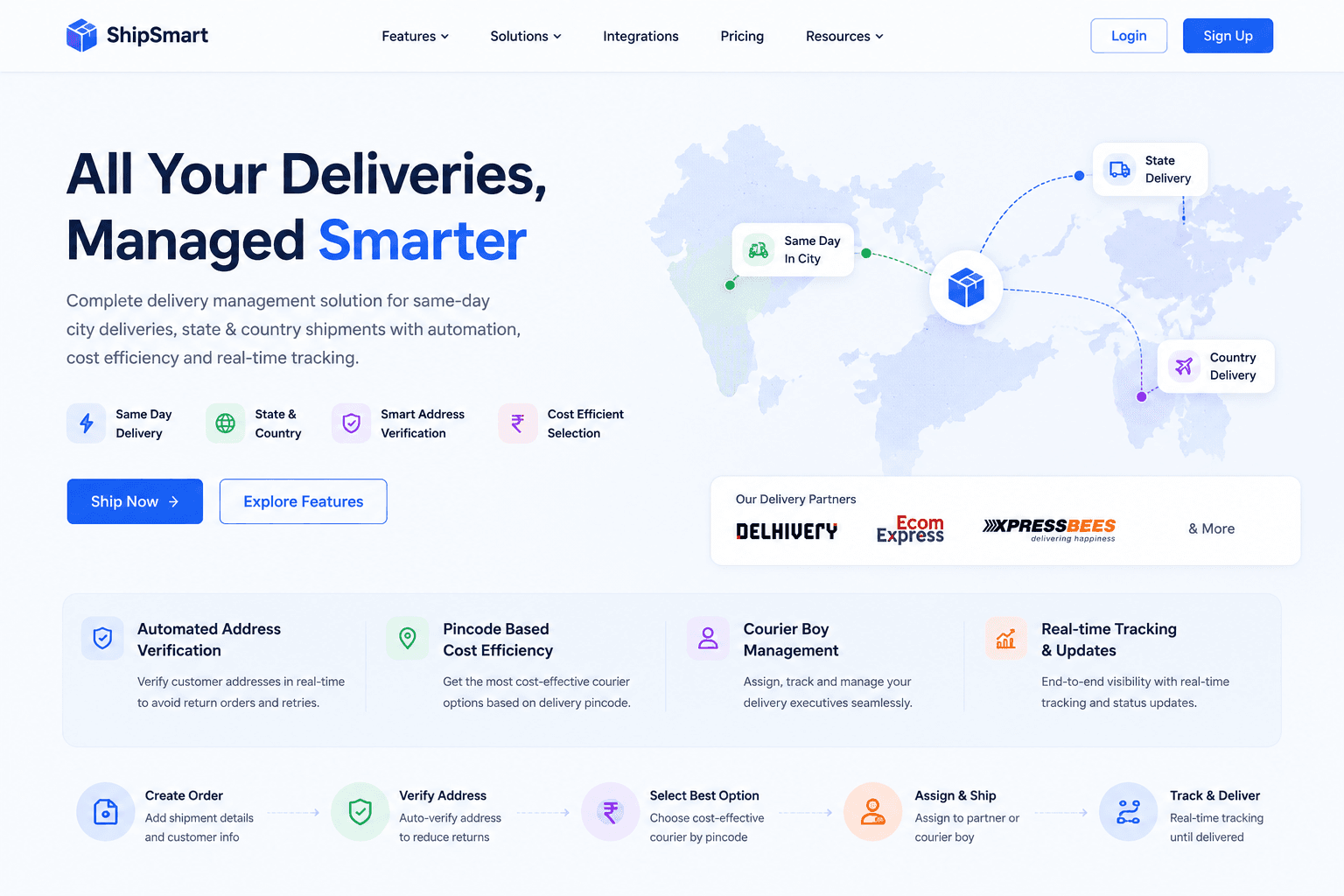
A same-day and regional delivery platform with web dispatch and mobile apps that orchestrates carriers, estimates ETAs, and recommends routing for logistics teams.
Read case studyServices that strengthen ecommerce outcomes
Frequently asked questions
Detailed answers to help you evaluate fit, scope, timeline, and delivery model.
Do you build custom e-commerce or only theme-based stores?
We can do both. Many clients need custom storefronts, checkout logic, and deep integrations; others need a stronger foundation on an existing commerce stack with better UX and operations tooling. We recommend custom build when your catalog, pricing, or fulfillment logic is the differentiator, and a packaged foundation when speed-to-launch matters more. Discovery clarifies that tradeoff with concrete scope and timeline ranges. Either path includes performance, mobile experience, and operable back-office workflows—not only a visual theme.
Can you integrate payments, shipping, and ERP tools?
Yes. Payment gateways, shipping providers, CRM, ERP, and inventory systems are common parts of our ecommerce engagements. We map the order lifecycle so finance and fulfillment are not stuck reconciling spreadsheets after launch. Error handling, retries, and operational alerts are designed with the happy path. Phased delivery usually connects payments and core fulfillment early, then expands partners. Your ops owners help define acceptance criteria for each integration.
Do you support headless commerce?
Yes. If you need a headless or API-first approach for channel flexibility and performance, we can design and build that architecture. Headless adds complexity, so we recommend it when the benefits outweigh operational cost—otherwise a well-built coupled storefront may ship faster. We walk engineering and growth stakeholders through the tradeoffs before committing. When headless is chosen, catalog, checkout, and integration workflows remain first-class. The decision is pragmatic, not ideological.
How long does an e-commerce build usually take?
Timelines vary by catalog complexity, integrations, and content readiness. Focused launches often take about 8–16 weeks; larger multi-vendor or heavily integrated platforms need phased delivery beyond that. Discovery produces a milestone plan with dependencies called out—payments, shipping, ERP, and migrations. We prefer shipping a usable storefront slice early over a long silent build. Your decision speed on catalog rules and design feedback is usually the biggest controllable variable.
Can you improve an existing store instead of rebuilding?
Yes. We can optimize checkout, performance, catalog structure, search, and integrations when a full rebuild is not required. Many stores need conversion and reliability work more than a new platform. We assess technical debt and funnel metrics before recommending rebuild versus improve. If rebuild is eventually needed, improvement work can still buy time and learning. Recommendations stay tied to revenue and operational outcomes.
Do you provide post-launch support?
Yes. Application maintenance, CRO support, performance work, and feature iteration can continue after launch through a retainer or scoped follow-up. Ecommerce systems change with campaigns, catalogs, and partner APIs, so a maintenance cadence matters. We agree response expectations and ownership before go-live. Analytics reviews can guide the next experiments. Launch is the start of optimization, not the end of the engagement.
Ready to build an online store that converts?
Tell us about your catalog, checkout needs, and growth goals and we will outline the right ecommerce build plan.