Courier Delivery Platform
A same-day and regional delivery platform with web dispatch and mobile apps that orchestrates carriers, estimates ETAs, and recommends routing for logistics teams.

Project overview
Last-mile work is a routing problem and a partner problem at the same time. Same-day city jobs and regional shipments need different carriers, different SLAs, and a dispatch decision that cannot wait on a spreadsheet.
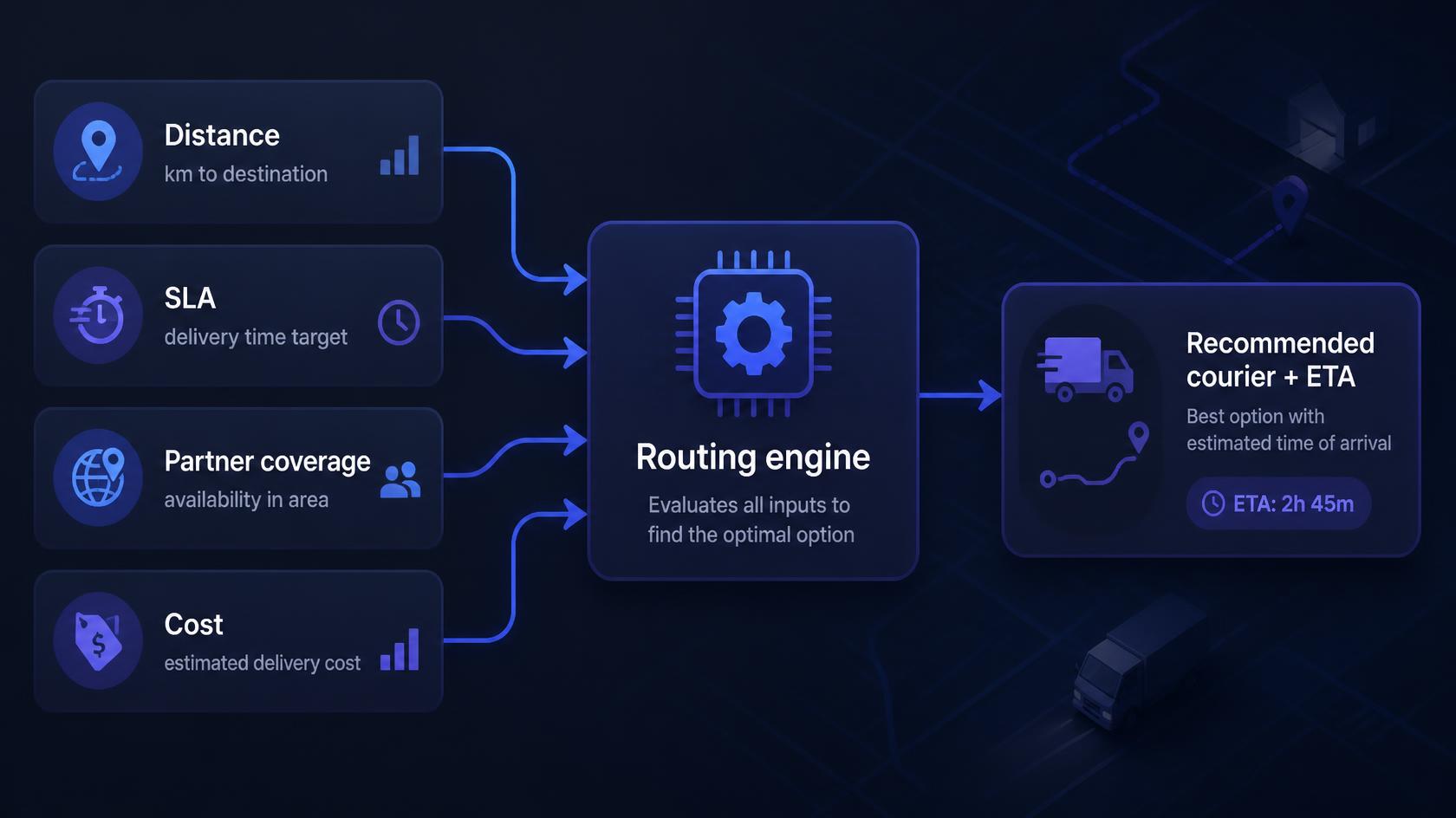
This courier platform brings order intake, multi-carrier routing, ETA estimation, and dispatch into one workflow — with mobile apps for couriers and customers alongside a web console for operations. AI helps estimate arrival windows and recommend a courier partner based on coverage, time, and cost — then operations can still override.
It is built for logistics teams that already work with multiple carrier partners and need one place to see what should move next, whether they are at a desk or on the road.
The challenge
The client needed a better way to manage multi-carrier dispatch, route planning, and delivery visibility across inner-city same-day jobs and regional shipments. Manual partner selection was slow, couriers lacked a reliable mobile job flow, and it was hard to explain ETAs to customers waiting on a delivery.
The solution
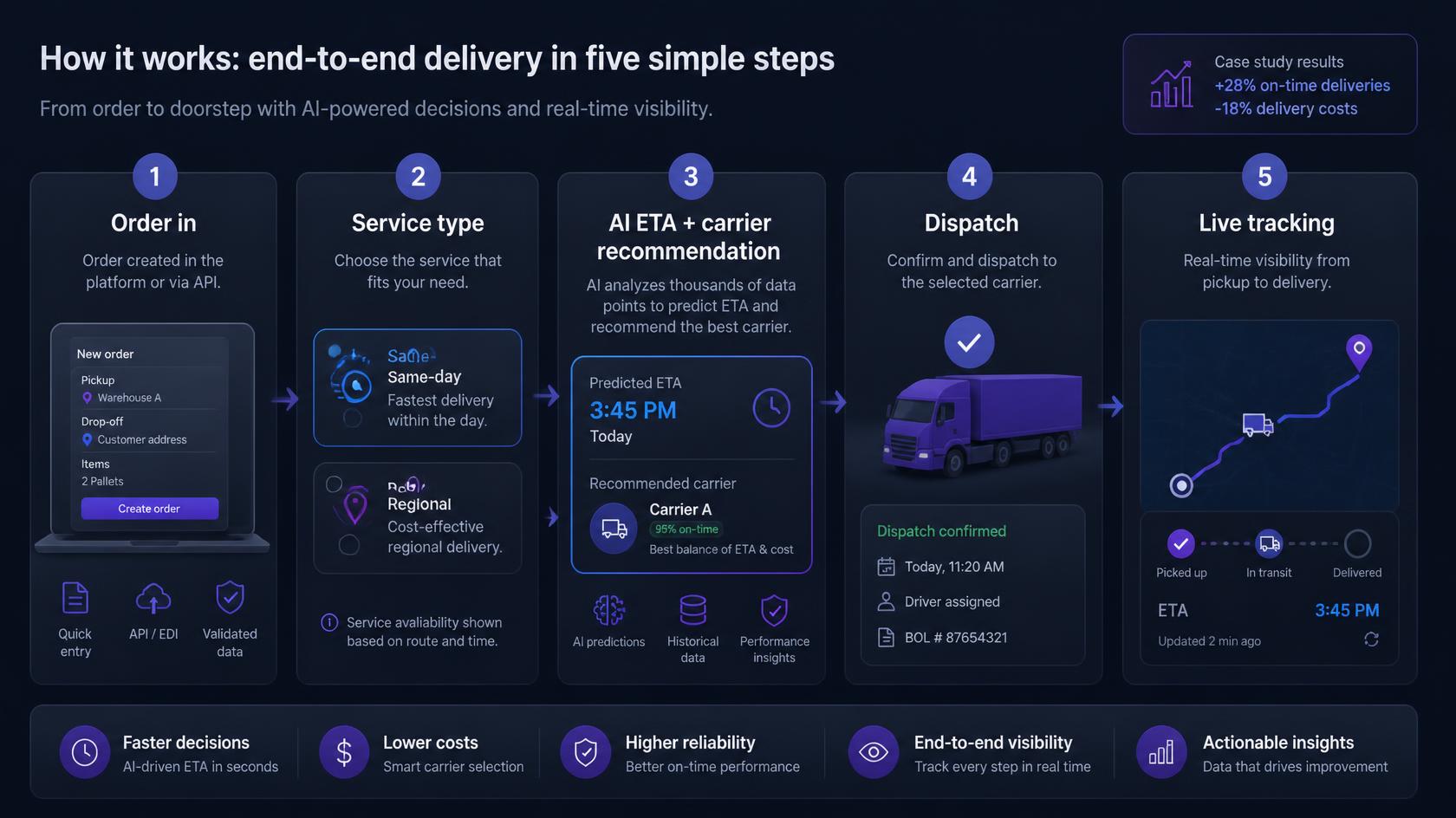
We created a delivery workflow platform with web dispatch, courier and customer mobile applications, routing logic, ETA estimation, and shipment orchestration. Dispatchers get a recommended partner and route, couriers update jobs from their phones, customers get a clearer ETA, and the team spends less time assembling a plan from carrier portals.
What we built
How we approached it
Split the network by job type
Same-day and regional shipments were modeled with different constraints so routing is not a one-size rule.
Score partners, then let dispatch decide
Recommendations use coverage, timing, and cost, while operations keep the final assignment.
Put couriers on mobile
Job assignment, status updates, and proof of delivery run through courier mobile apps so the field stays in sync with dispatch.
Estimate ETAs from the same data
Arrival windows are produced as part of dispatch, not as a later customer-service guess — and surface in the customer mobile experience.
Unify tracking after the handoff
Once a job is with a partner, status still needs to be visible in the platform operations already uses.
Examples from the workflow
These are the kinds of moments the system was designed to handle — not hypothetical product slides.
A same-day job at midday
Dispatch sees which partner can still hit the window, gets an ETA, and assigns without opening three carrier tools — the courier picks it up instantly on mobile.
A regional shipment with cost pressure
The recommendation can favor a partner with better coverage and cost for the lane, while still showing the time tradeoff.
Customer asking 'when will it arrive?'
ETA is attached to the shipment record and visible in the customer mobile app, so support is not reconstructing a promise from chat history.
Stack and delivery pieces
Outcomes
Questions this case study usually raises
Does this courier platform replace carrier partners?
No. It orchestrates existing courier partners. The value is routing, ETA, and dispatch in one place — with mobile apps for the field — rather than working inside each carrier portal. In Customer asking 'when will it arrive?', automation is designed to remove repetitive work and improve consistency while people retain ownership of judgment calls, exceptions, and final accountability. Success is measured in faster cycle time and better context for humans—not in removing the function entirely. Guardrails and review paths are part of the operating model so the system stays trustworthy after launch.
Does it include mobile applications?
Yes. We built iOS and Android apps for couriers (job acceptance, status, proof of delivery) and customers (tracking and ETAs), alongside the web dispatch console. For engagements like Customer asking 'when will it arrive?', we confirm fit during discovery against your stack, volume, and compliance constraints rather than assuming every environment matches the case study one-to-one. Integrations, permissions, and review gates are planned explicitly. A pilot usually proves the highest-value path first, then expands once quality and adoption are clear. That keeps delivery practical and measurable.
Can it handle both same-day and regional deliveries?
Yes. Inner-city same-day jobs and state or region-wide shipments were designed as first-class job types with different routing rules. For engagements like Customer asking 'when will it arrive?', we confirm fit during discovery against your stack, volume, and compliance constraints rather than assuming every environment matches the case study one-to-one. Integrations, permissions, and review gates are planned explicitly. A pilot usually proves the highest-value path first, then expands once quality and adoption are clear. That keeps delivery practical and measurable.
How does AI help dispatch?
AI is used to estimate ETAs and recommend a courier partner based on coverage, time, and cost. Dispatchers still make the assignment. In practice for Customer asking 'when will it arrive?', those rules are encoded in the workflow with logging so operators can see what occurred and intervene when needed. Edge cases are designed deliberately rather than left to improvisation. After launch, failure patterns feed iteration—knowledge updates, routing changes, or model/evaluation improvements. The operating model is meant to stay visible and supportable for your team.
Will customers see better delivery visibility?
ETA and shipment status are part of the operational record and surface in the customer mobile experience, which is what support and customers need when a delivery is in motion. In Customer asking 'when will it arrive?', those details were treated as product requirements—not afterthoughts—so the workflow stayed usable for real operators. Discovery, phased delivery, and evaluation against real scenarios shaped what shipped. If you pursue a similar build, we start by mapping your equivalent constraints and success metrics. The case study is a reference for approach and outcomes; your implementation is tailored through scoping.
More case studies
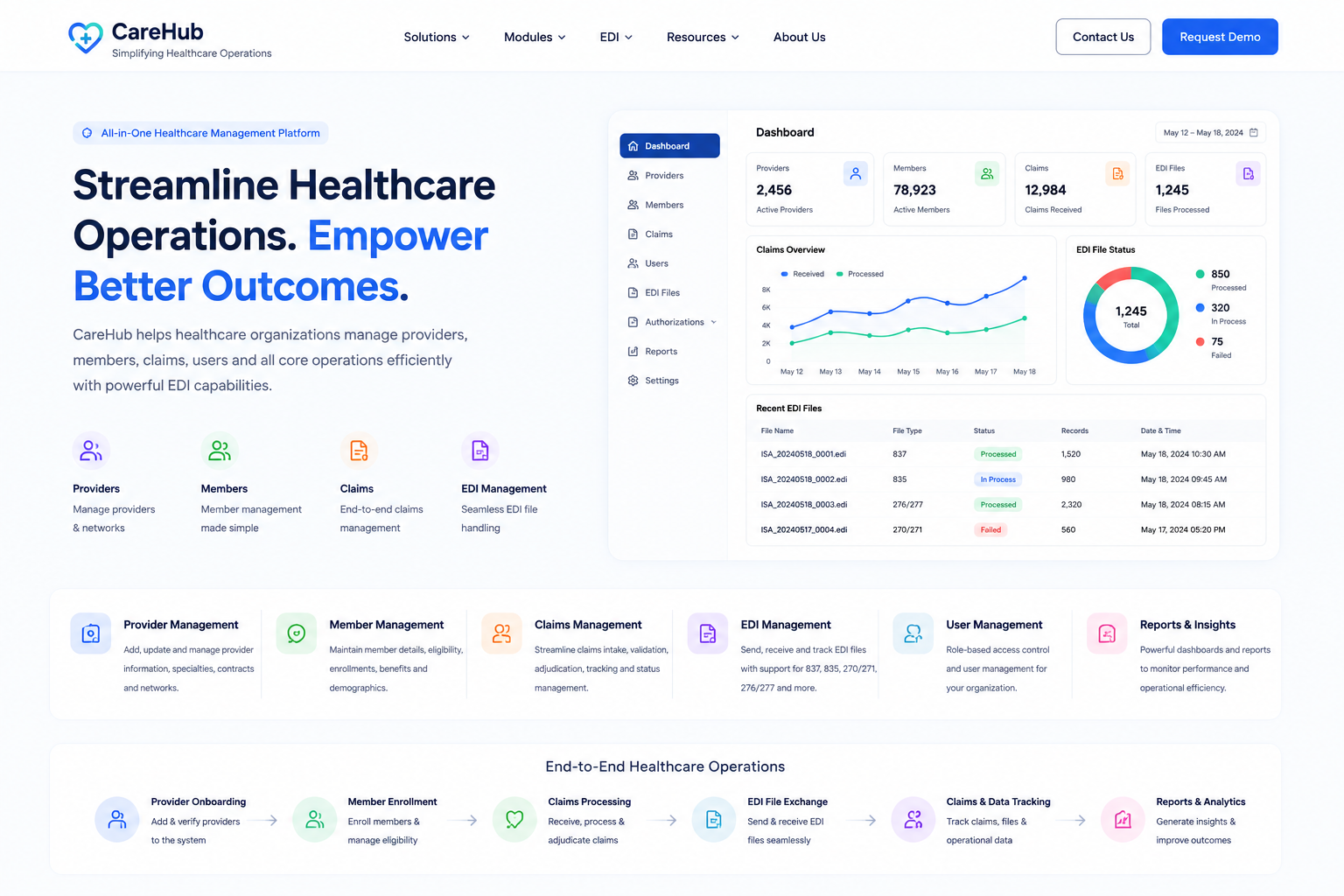
Healthcare Claims Management Platform
A HIPAA-ready healthcare operations platform that centralizes vendor data, claims processing, member administration, and plan management for U.S. healthcare teams.
Read case study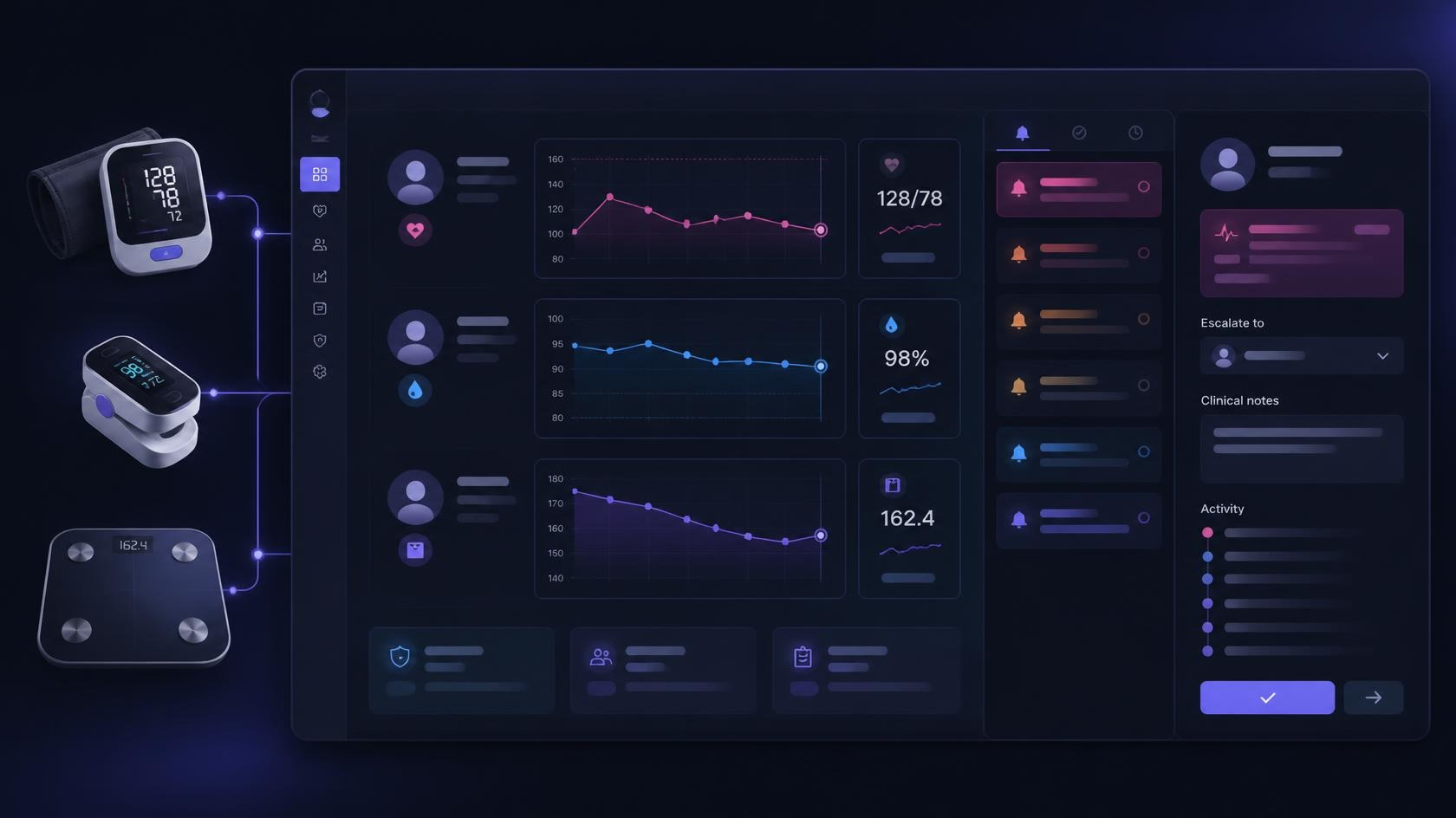
Remote Patient Monitoring Operations Console
A HIPAA-conscious remote patient monitoring console that ingests device readings, applies threshold rules, routes alerts to nursing staff, and escalates to clinicians with a full audit trail.
Read case study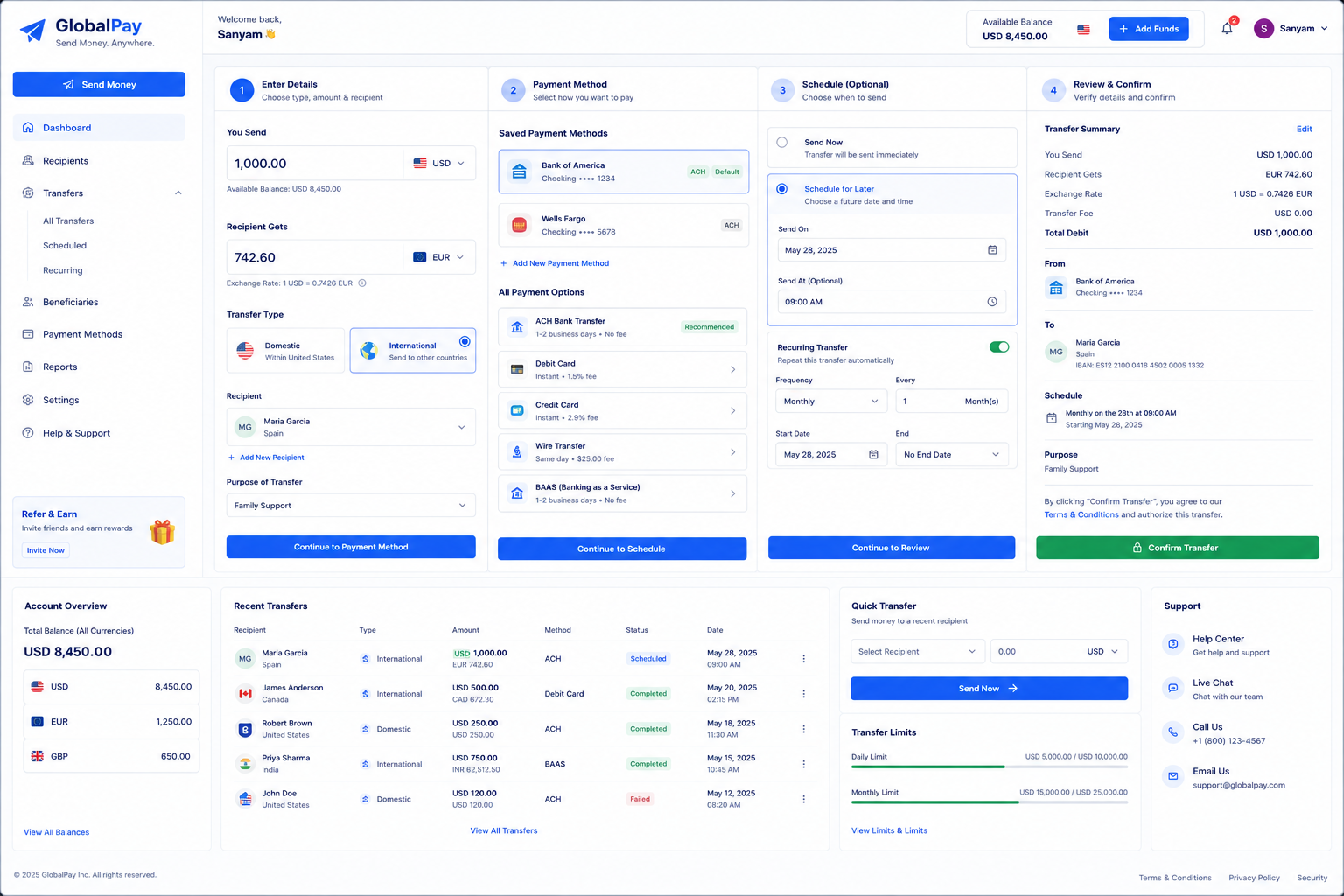
Global Payments & BaaS Platform
A cross-border payments and Banking-as-a-Service platform that orchestrates ACH, RTP, SWIFT, and regional rails for merchants and financial partners.
Read case studyNeed a case study like this?
Client names stay confidential. Request fuller details under NDA, or talk through a similar workflow for your team.