Global Payments & BaaS Platform
A cross-border payments and Banking-as-a-Service platform that orchestrates ACH, RTP, SWIFT, and regional rails for merchants and financial partners.
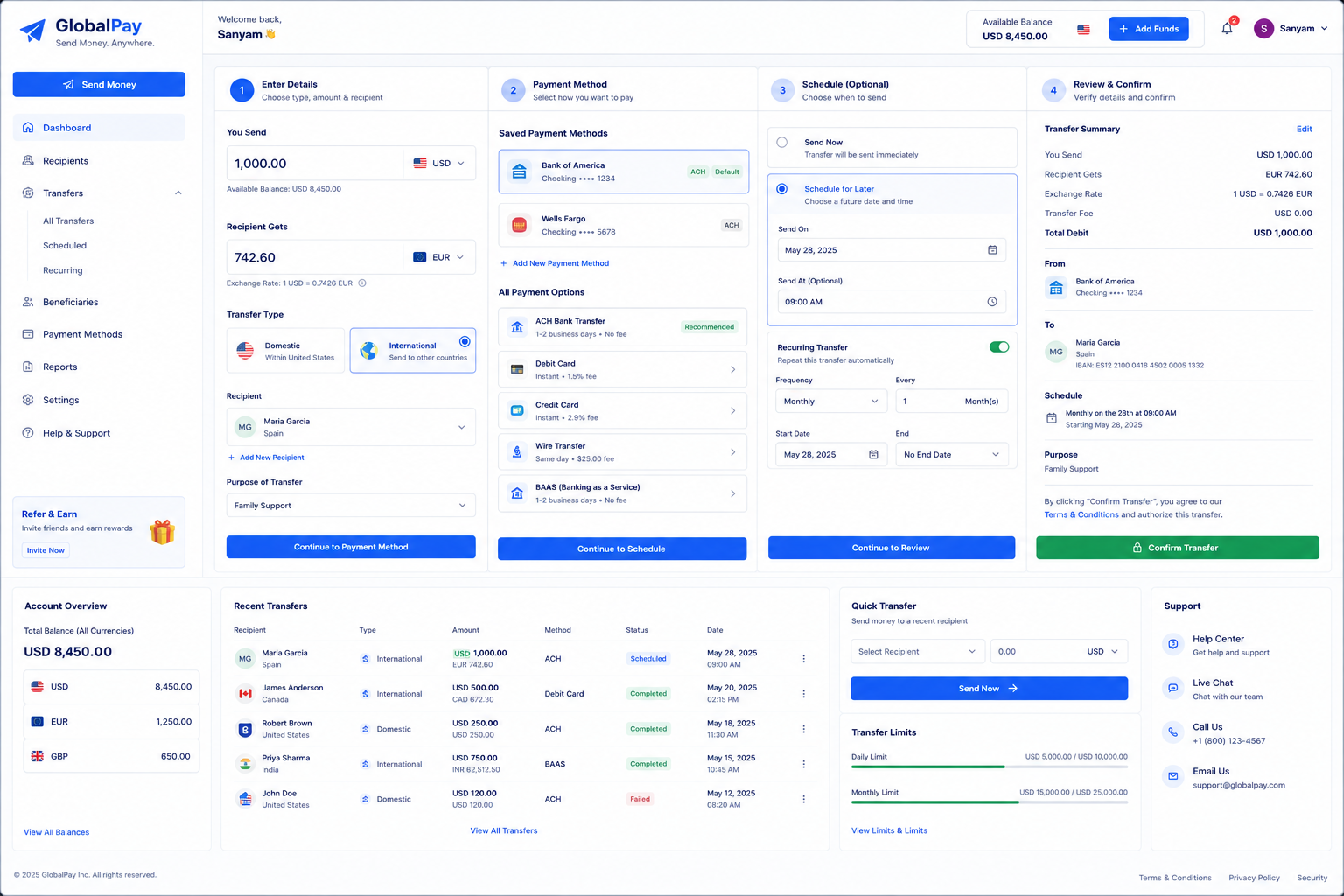
Project overview
International payments rarely fail because a team cannot send money. They fail because ACH, RTP, SWIFT, and regional networks all have different onboarding, compliance, and settlement rules, and someone has to stitch those together.
This BaaS platform gives merchants and financial partners one orchestration layer. Transfers can be routed across rails, compliance and KYC checks sit in the same flow, and APIs expose the work without forcing every partner to rebuild payment operations from scratch.
The result is a payments layer that looks like one product to the partner, even when the money is moving across several networks behind the scenes.
The challenge
The client needed a single orchestration layer for international transfers, settlement routing, and compliance checks. Partners were otherwise integrating each rail separately and reconstructing payment status from multiple systems.
The solution
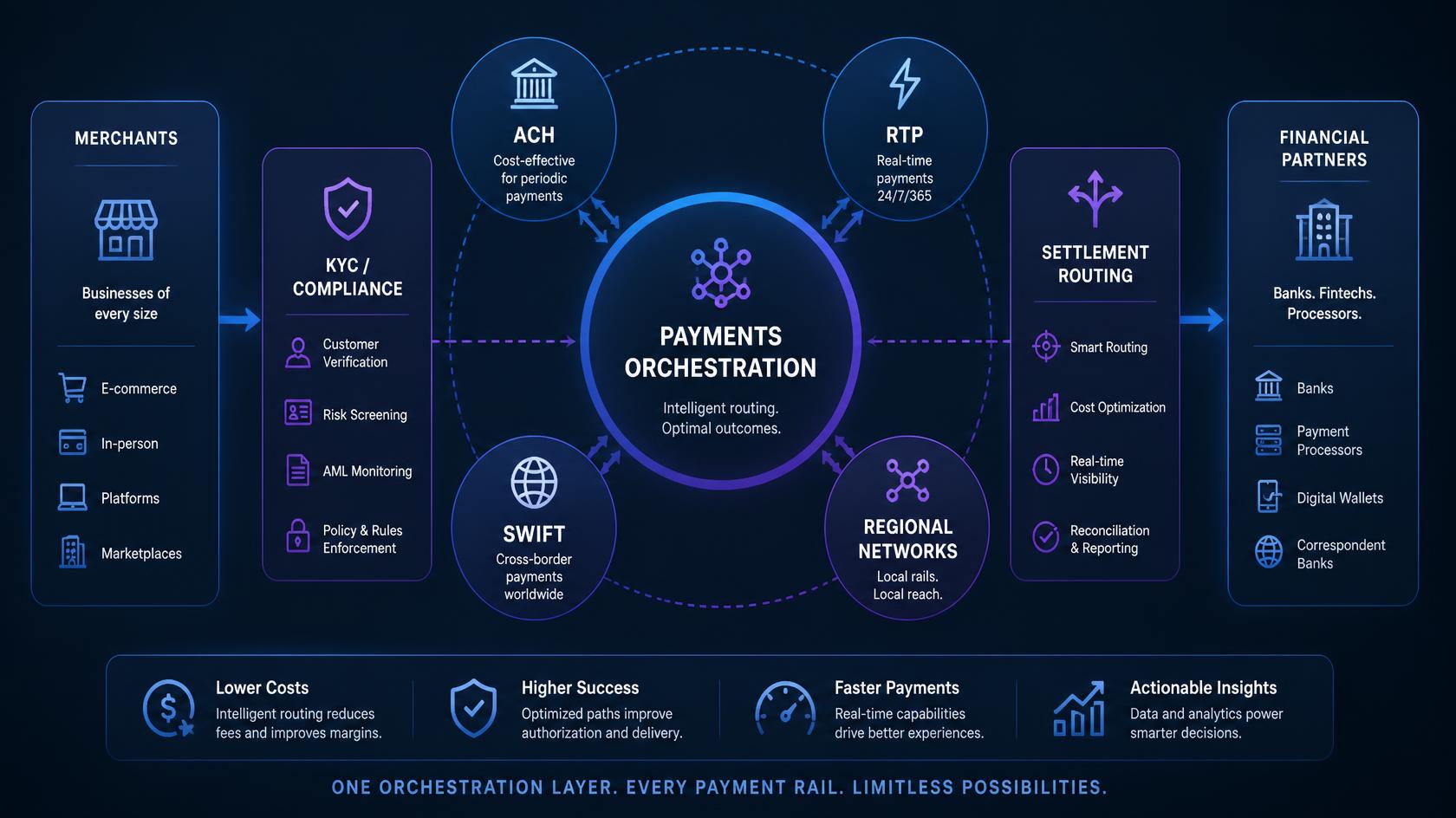
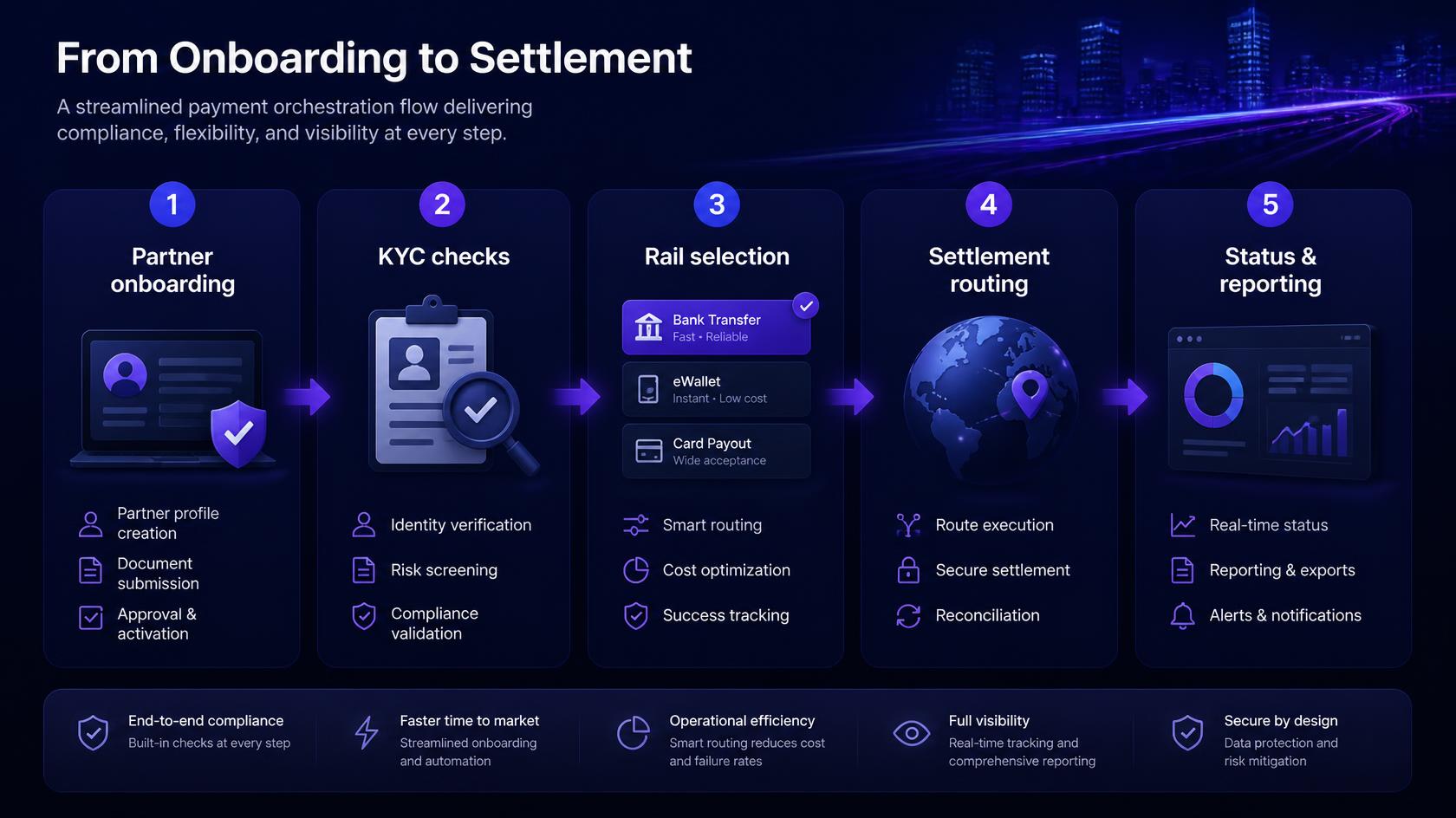
We built a BaaS payments platform with multi-currency support, KYC integrations, and partner APIs. Routing, compliance, and settlement reporting share one operational picture so money movement is orchestrated rather than assembled by hand.
What we built
How we approached it
Treat rails as routes, not products
Each network became a routing option with its own rules, not a separate app that partners had to learn.
Put compliance in the path
KYC and compliance checks were modeled as part of the transfer lifecycle, not a side process.
Expose one API surface
Merchants and partners get a consistent way to initiate, track, and reconcile payments even when the rail changes.
Make settlement explainable
Status, exceptions, and reporting were designed so operations teams can answer 'where is this payment?' without a war room.
Examples from the workflow
These are the kinds of moments the system was designed to handle — not hypothetical product slides.
Merchant payout across more than one rail
A payout can be routed to the network that fits the corridor, timing, and partner coverage without a custom integration for each destination.
Partner onboarding without rebuilding payments
A financial partner can connect through APIs and inherit orchestration, KYC hooks, and settlement reporting already in the platform.
Exception handling with shared status
When a transfer needs review, operations sees routing, compliance, and settlement context together instead of three different consoles.
Stack and delivery pieces
Outcomes
Questions this case study usually raises
What is a BaaS payments platform in this case study?
It is a Banking-as-a-Service layer that lets merchants and financial partners move money across ACH, RTP, SWIFT, and regional rails through one orchestration and API surface. That distinction matters for scoping Exception handling with shared status: we align on users, boundaries, and non-goals during discovery so the build does not drift into unrelated platform work. Deliverables and success metrics follow that definition. If a lighter or different approach fits better, we say so before heavy engineering begins. Related screens and workflows in the case study show how the scope played out in practice.
Which payment rails does the platform support?
The build was designed around ACH, RTP, SWIFT, and regional payment networks, with routing chosen per transfer rather than forcing one rail for every corridor. For engagements like Exception handling with shared status, we confirm fit during discovery against your stack, volume, and compliance constraints rather than assuming every environment matches the case study one-to-one. Integrations, permissions, and review gates are planned explicitly. A pilot usually proves the highest-value path first, then expands once quality and adoption are clear. That keeps delivery practical and measurable.
How are KYC and compliance handled?
Compliance and KYC checks are part of the transfer lifecycle, so routing and settlement are not decided in isolation from onboarding and review rules. In practice for Exception handling with shared status, those rules are encoded in the workflow with logging so operators can see what occurred and intervene when needed. Edge cases are designed deliberately rather than left to improvisation. After launch, failure patterns feed iteration—knowledge updates, routing changes, or model/evaluation improvements. The operating model is meant to stay visible and supportable for your team.
Can this be used by both merchants and financial partners?
Yes. APIs and operational views were built so merchants can initiate and track transfers while financial partners can plug into the same orchestration layer. For engagements like Exception handling with shared status, we confirm fit during discovery against your stack, volume, and compliance constraints rather than assuming every environment matches the case study one-to-one. Integrations, permissions, and review gates are planned explicitly. A pilot usually proves the highest-value path first, then expands once quality and adoption are clear. That keeps delivery practical and measurable.
More case studies

Foreign Exchange Management Software
A treasury-grade FX platform for tracking rates, executing transactions, and managing multi-currency positions with automated settlement workflows.
Read case study
Healthcare Claims Management Platform
A HIPAA-ready healthcare operations platform that centralizes vendor data, claims processing, member administration, and plan management for U.S. healthcare teams.
Read case study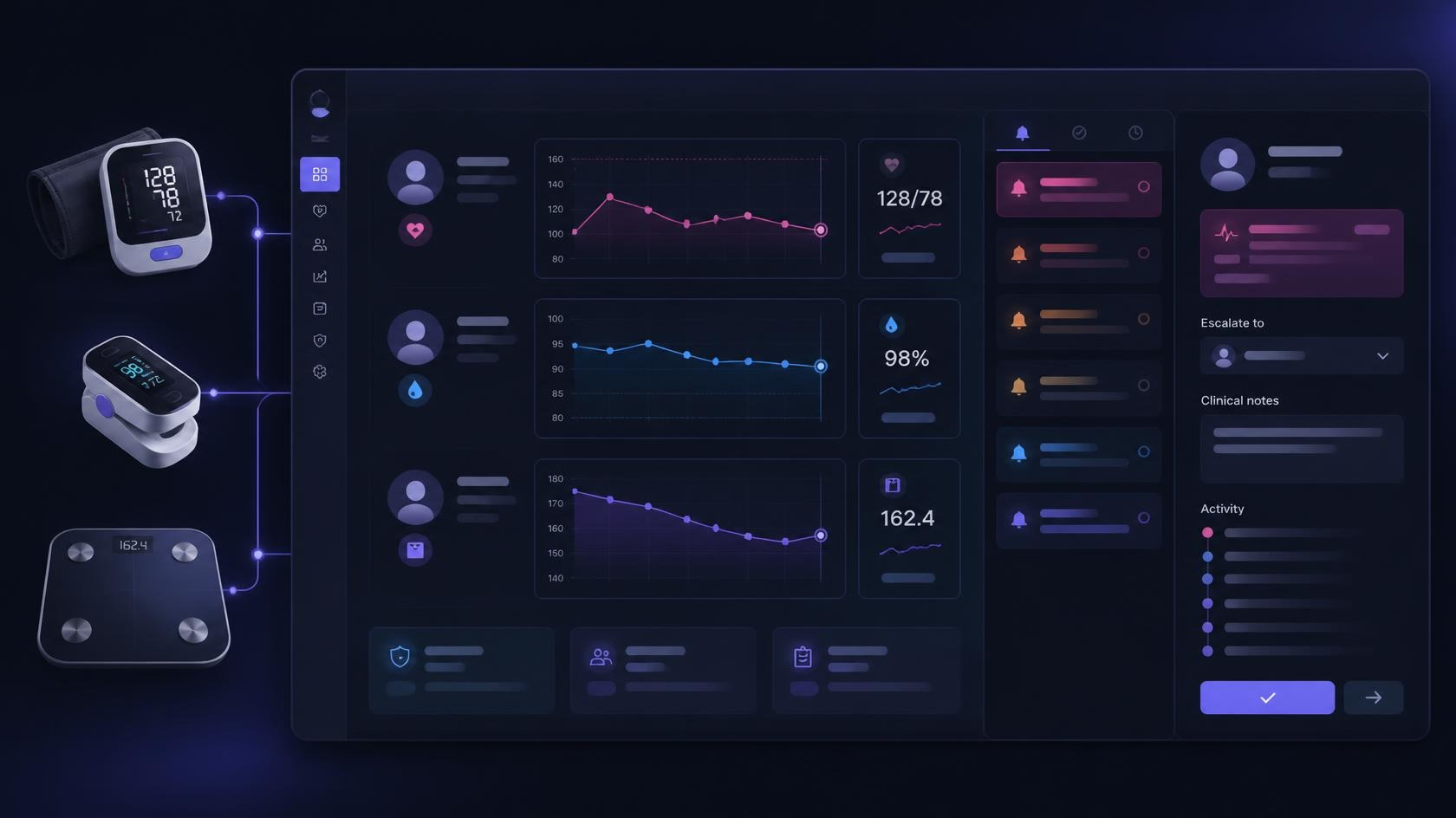
Remote Patient Monitoring Operations Console
A HIPAA-conscious remote patient monitoring console that ingests device readings, applies threshold rules, routes alerts to nursing staff, and escalates to clinicians with a full audit trail.
Read case studyNeed a case study like this?
Client names stay confidential. Request fuller details under NDA, or talk through a similar workflow for your team.