Remote Patient Monitoring Operations Console
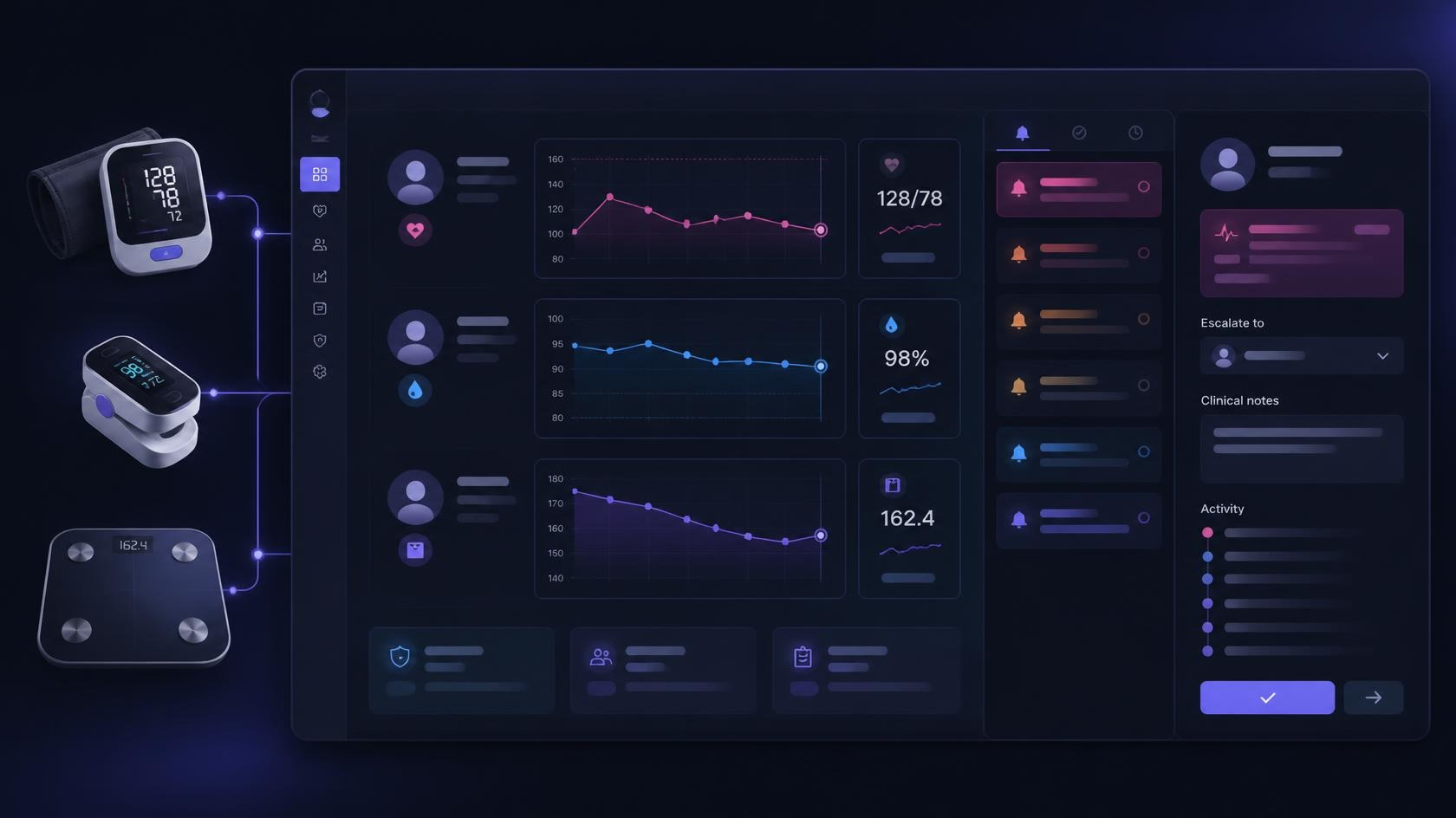
A HIPAA-conscious remote patient monitoring console that ingests device readings, applies threshold rules, routes alerts to nursing staff, and escalates to clinicians with a full audit trail.
Project overview
Remote patient monitoring programs fail when readings arrive from many devices, thresholds differ by patient, and alerts flood inboxes with no shared queue. Nurses lose context; escalations to clinicians become phone tag.
We built an operations console around the real care workflow: enroll patients and devices, ingest readings, evaluate rules, put exceptions in a nurse review queue, and escalate with a handoff summary when clinical judgment is needed.
The system is designed for chronic-care and hospital-at-home style programs—blood pressure, pulse oximetry, weight, glucose, and similar signals—without treating the software as an autonomous diagnostic engine.
The challenge
The care team needed one place to see who was trending wrong today. Device feeds, patient-specific thresholds, and outreach notes lived in separate tools, so critical readings were easy to miss and hard to document for audit.
The solution
We delivered a secure RPM operations console with enrollment, ingestion, rule-based alerting, nurse review, clinician escalation, trend views, and audit logging. Role-based access keeps PHI protected while care managers work from one caseload picture.
What we built
How we approached it
Map the monitoring workflow
We documented how nurses triage overnight alerts, when clinicians must be involved, and which readings can wait for the morning huddle.
Model patients, devices, and rules
Enrollment, device identity, and threshold rules were designed so a reading always lands with the right patient context and care program.
Put humans on the expensive decisions
Automation ranks and routes alerts; nurses validate and document; clinicians receive escalations with history instead of raw device noise.
Make the caseload visible
Dashboards surface patients needing review, aging alerts, and escalation status so supervisors can see coverage gaps before they become incidents.
Examples from the workflow
These are the kinds of moments the system was designed to handle — not hypothetical product slides.
Overnight SpO₂ drop
A sustained low pulse-ox reading creates a high-priority alert. The nurse validates the trend, attempts outreach, and escalates with the reading window attached.
CHF weight-gain rule
A multi-day weight increase crosses a patient-specific threshold. The nurse logs a check-in and care-plan note without reconstructing data from multiple portals.
Morning caseload huddle
The team opens a dashboard of patients needing review today—open alerts, pending escalations, and who already completed outreach.
Stack and delivery pieces
Outcomes
Questions this case study usually raises
Is this a diagnostic AI that replaces clinicians?
No. The console is an operations system for remote monitoring programs. It ingests readings, applies configured thresholds, and routes work to nurses and clinicians. Clinical judgment stays with licensed staff. Escalation paths and documented actions are part of the design so the software supports care coordination rather than making unsupervised medical decisions.
Which devices and signals does it support?
The pattern is built for common RPM signals such as blood pressure, pulse oximetry, weight, and glucose, including vendor API feeds and manual entry when a device is offline. Exact device integrations depend on the program’s vendors and data contracts. During discovery we map which readings matter, how often they arrive, and which thresholds belong to the patient versus the care program.
How do nurses and clinicians stay in control?
Alerts land in a review queue with history and priority. Nurses validate, document outreach, and escalate when needed. Clinicians receive a structured handoff instead of a raw alert dump. Role-based access and audit logs keep actions attributable. Autonomy is limited to routing and prioritization; high-impact clinical responses remain human-owned.
How is this different from the healthcare claims platform case study?
The claims platform focuses on payer and administrative operations—vendors, claims, groups, and plans. This RPM console focuses on clinical operations at home: device readings, alert triage, nursing review, and clinician escalation. Both are HIPAA-conscious healthcare systems, but they serve different buyers and workflows. Many organizations need both kinds of software for different teams.
Can CogniCrew AI Solutions adapt this for another RPM program?
Yes. The reusable pieces are enrollment, ingestion, rules, review queues, escalation, and auditability. Device vendors, threshold libraries, and care-program definitions are configured per client. We typically pilot one cohort or condition first, prove triage quality and adoption, then expand. Discovery confirms compliance constraints, identity, and which actions must stay human-reviewed.
More case studies
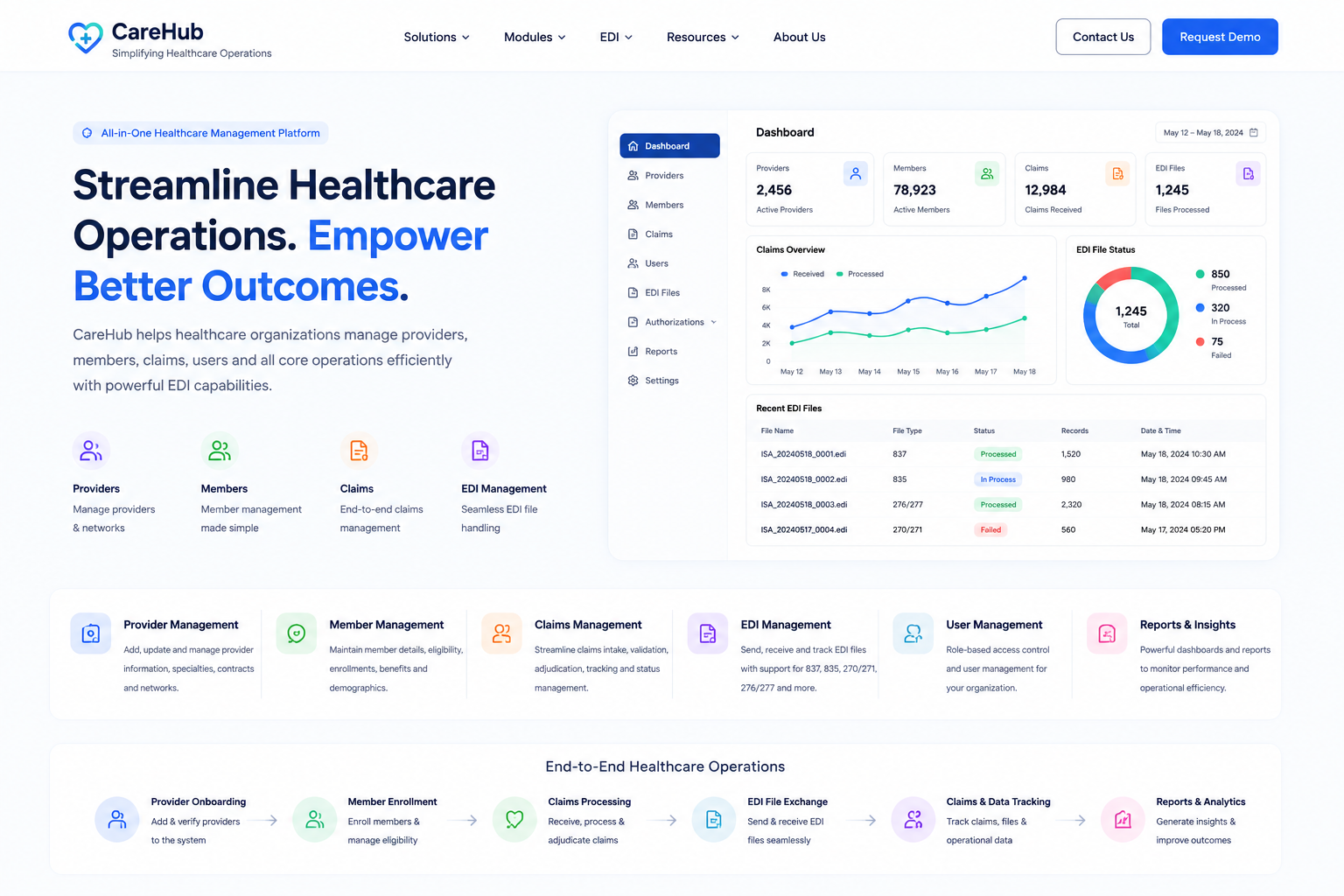
Healthcare Claims Management Platform
A HIPAA-ready healthcare operations platform that centralizes vendor data, claims processing, member administration, and plan management for U.S. healthcare teams.
Read case study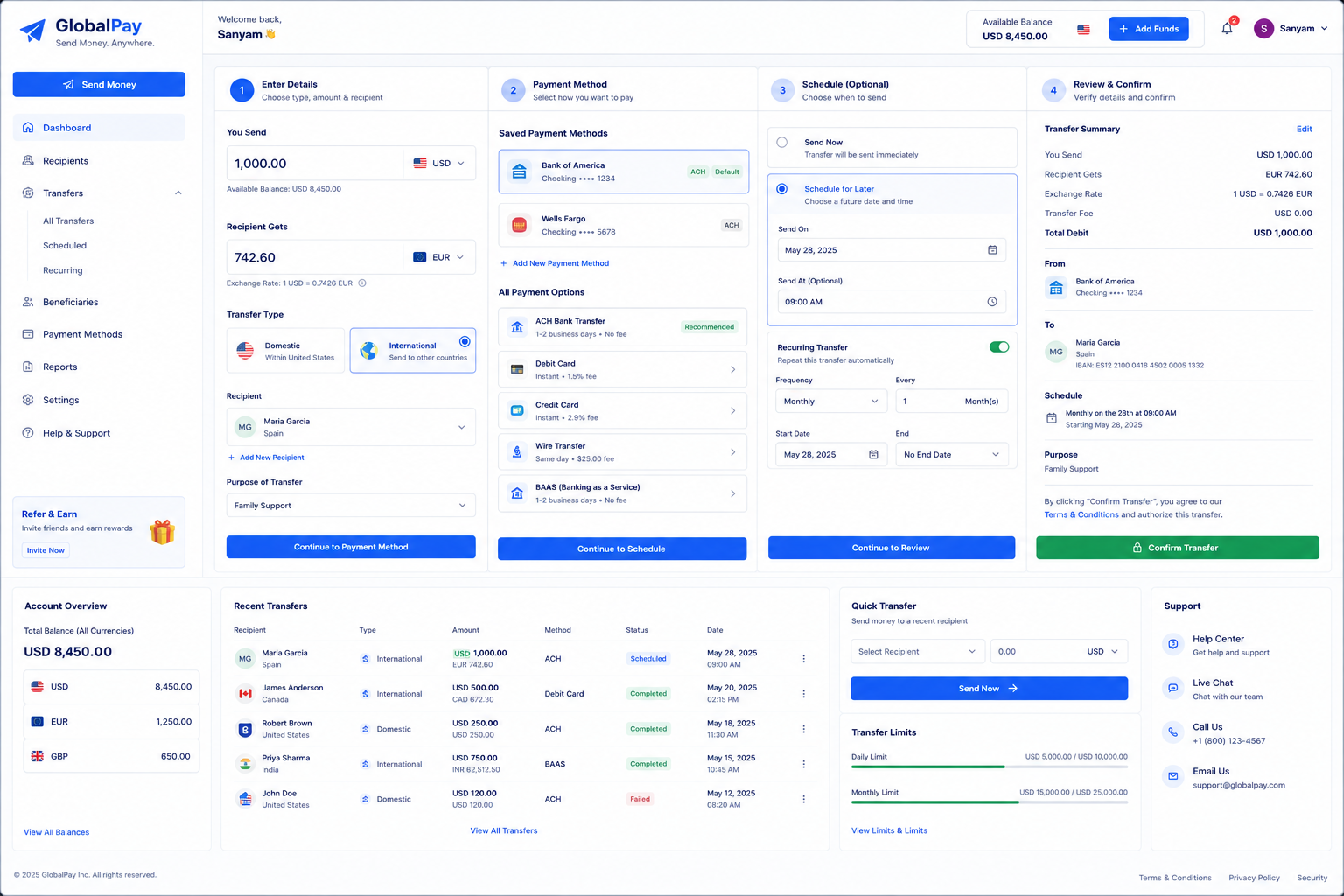
Global Payments & BaaS Platform
A cross-border payments and Banking-as-a-Service platform that orchestrates ACH, RTP, SWIFT, and regional rails for merchants and financial partners.
Read case study
Foreign Exchange Management Software
A treasury-grade FX platform for tracking rates, executing transactions, and managing multi-currency positions with automated settlement workflows.
Read case studyNeed a case study like this?
Client names stay confidential. Request fuller details under NDA, or talk through a similar workflow for your team.