Healthcare Claims Management Platform
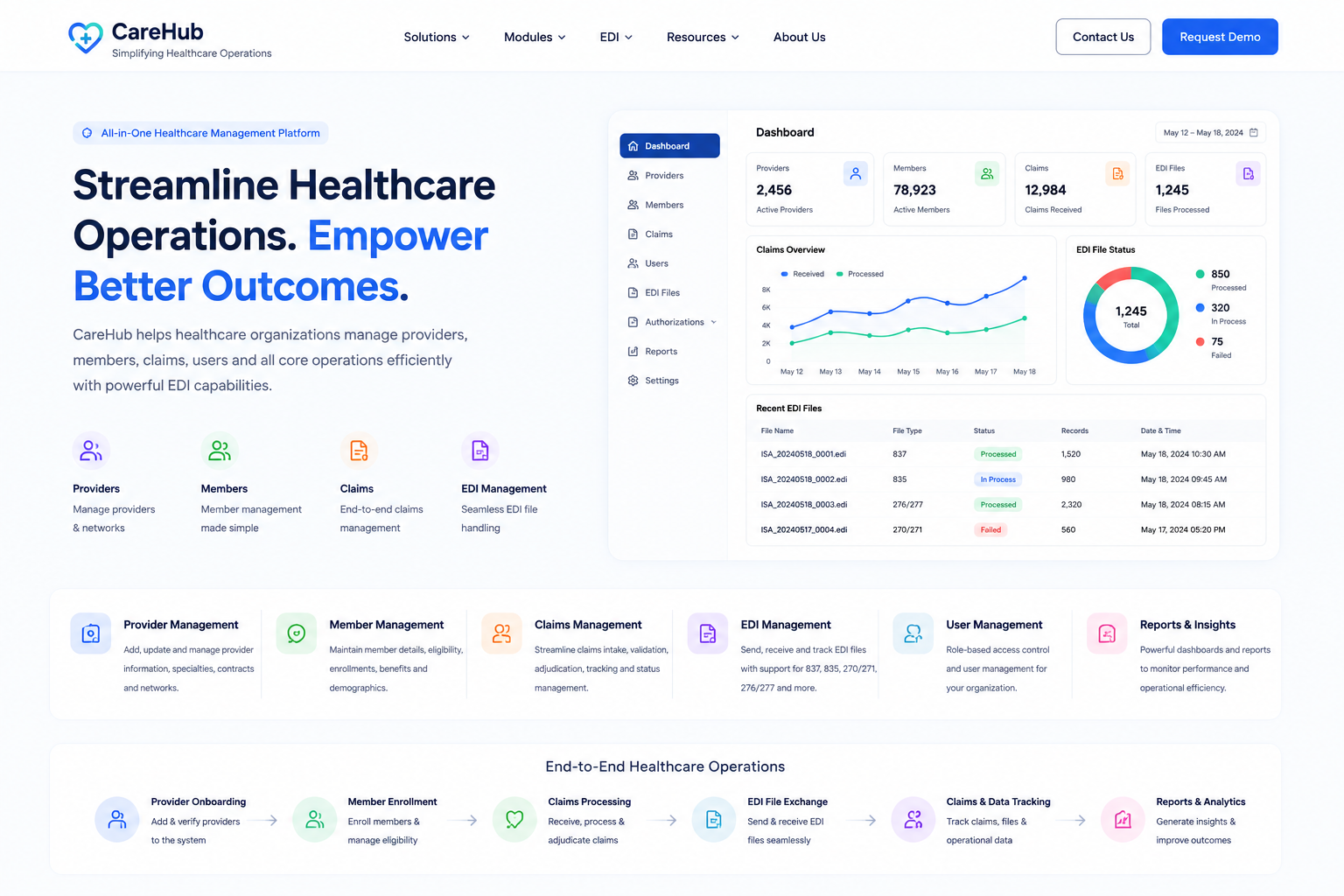
A HIPAA-ready healthcare operations platform that centralizes vendor data, claims processing, member administration, and plan management for U.S. healthcare teams.
Project overview
Healthcare operations often split vendor records, claims, member groups, and plan rules across separate tools. That creates slow handoffs, incomplete reporting, and too much manual coordination for staff who already work under tight SLAs.
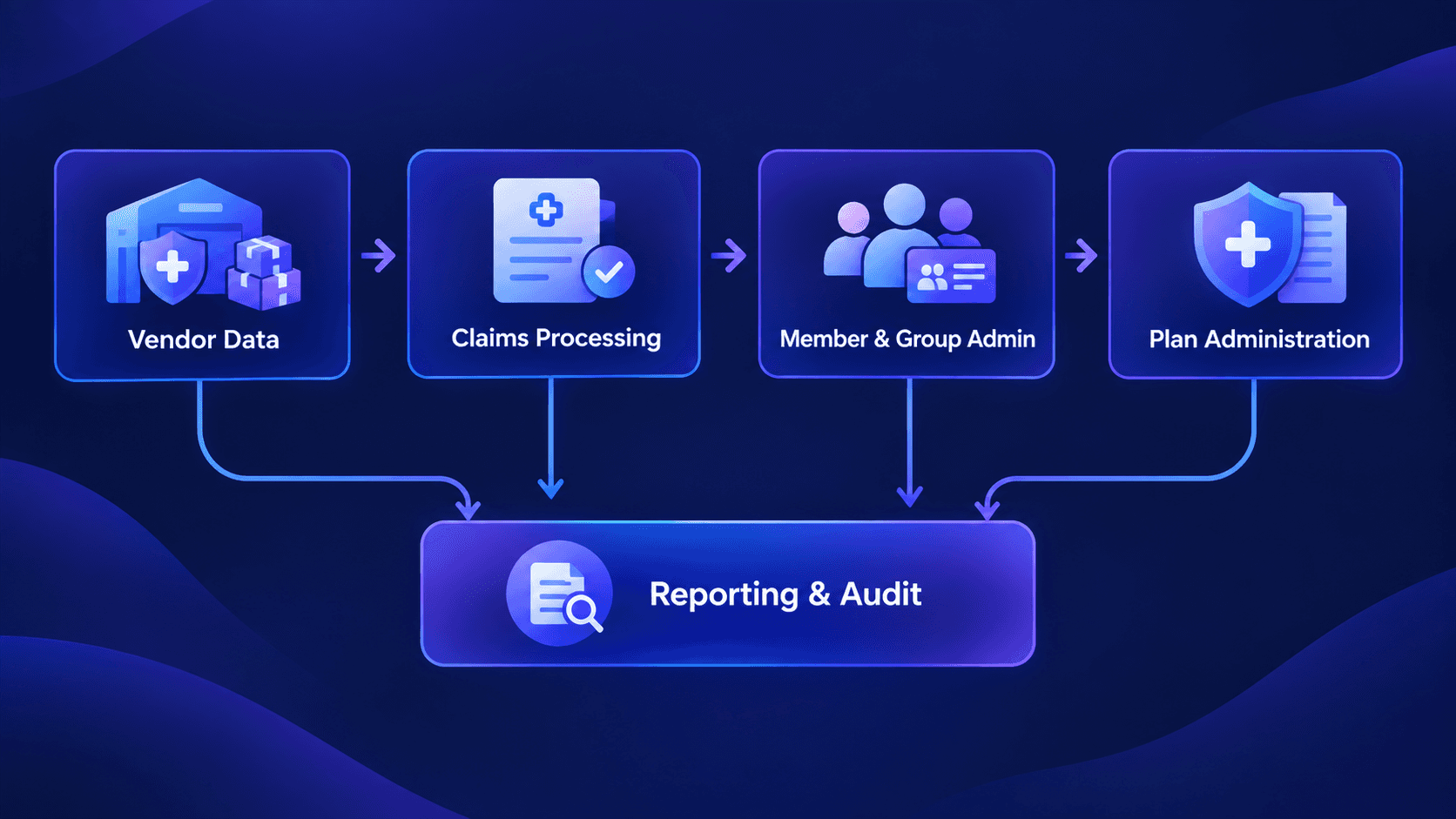
We built a single healthcare operations platform so vendor data, claims workflows, member administration, and plan management live in one system. Teams can follow a claim or a group change without jumping between spreadsheets, inboxes, and disconnected portals.
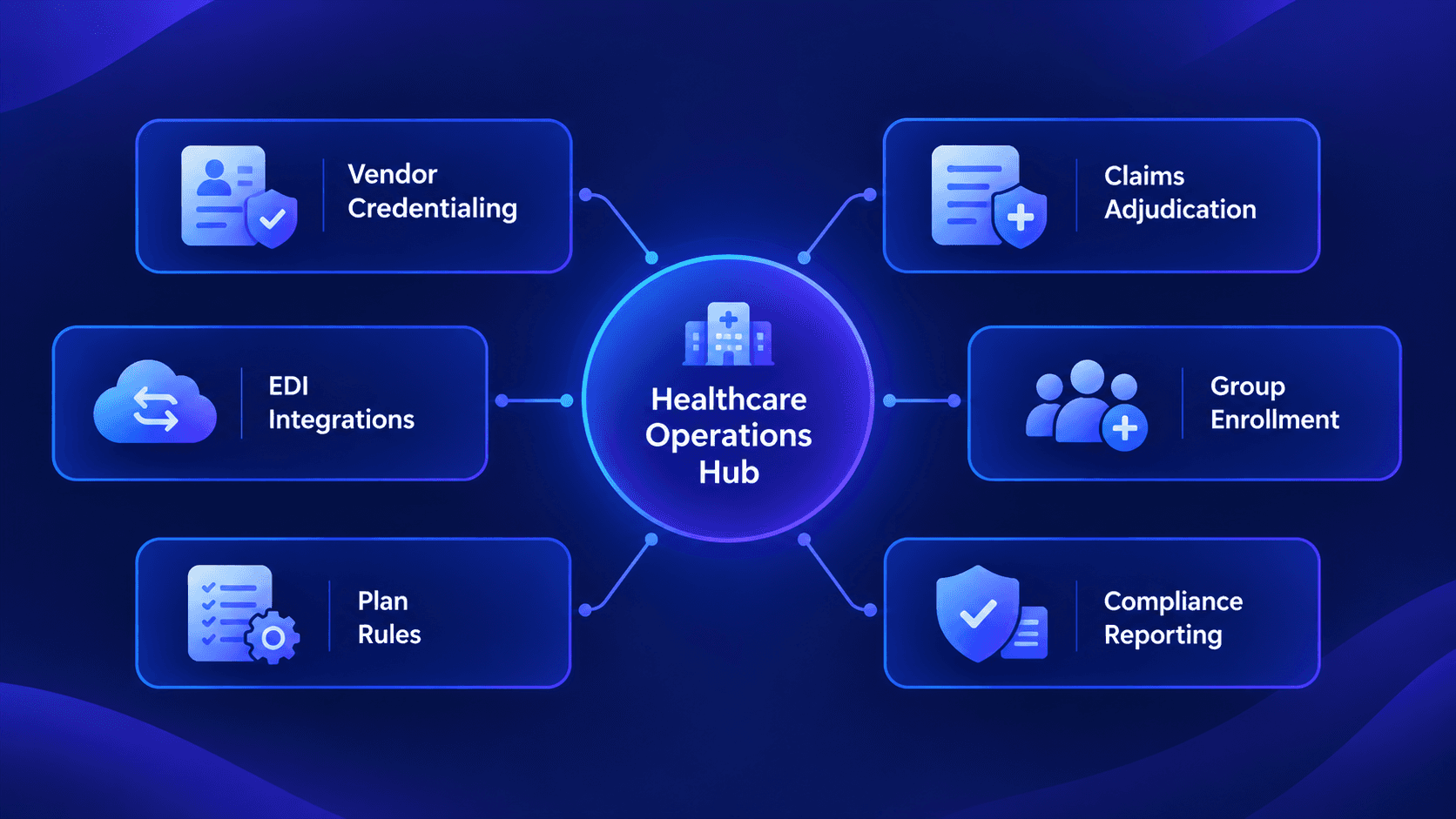
The work was designed for HIPAA-conscious data handling, EDI-style integrations, and the day-to-day reality of payer and provider operations: credentialing, adjudication, reconciliation, and audit-ready reporting.
The challenge
The client needed one system for healthcare operations instead of a patchwork of vendor files, claims queues, and plan-admin tools. Manual coordination made it hard to see claim status, keep vendor records current, and report on group or plan changes with confidence.
The solution
We delivered a secure workflow platform that organizes healthcare records, automates claims steps, and gives leadership a clearer operational picture. Vendor credentialing, claims adjudication, member and group administration, and plan rules sit on a shared data model with role-based access and audit-friendly reporting.
What we built
How we approached it
Map the operating workflow
We started with how vendor, claims, group, and plan teams actually work — including the exceptions that never show up in a process slide.
Unify the data model
Vendor, member, claim, and plan records were modeled so a change in one area is visible to the next team without a manual export.
Automate the high-volume steps
Claims validation, status updates, and routine admin tasks were automated first, with humans kept on exceptions and approvals.
Make operations visible
Dashboards and reports were built for the questions leadership already asked: claim aging, vendor status, group changes, and plan activity.
Examples from the workflow
These are the kinds of moments the system was designed to handle — not hypothetical product slides.
Claims desk without spreadsheet chase-down
A claims analyst can open a case, see member and plan context, and move the claim forward without asking another team for a file extract.
Vendor credentialing in the same system
Credential and contract dates sit next to operational history, so renewals and performance questions are not buried in a separate tracker.
Group and plan changes with an audit trail
When an employer group changes coverage, administration and reporting stay connected instead of being reconstructed after the fact.
Stack and delivery pieces
Outcomes
Questions this case study usually raises
What does this healthcare claims platform actually include?
It brings vendor data, claims processing, member and group administration, and plan management into one operational system, with reporting on top of the same records. For engagements like Group and plan changes with an audit trail, we confirm fit during discovery against your stack, volume, and compliance constraints rather than assuming every environment matches the case study one-to-one. Integrations, permissions, and review gates are planned explicitly. A pilot usually proves the highest-value path first, then expands once quality and adoption are clear. That keeps delivery practical and measurable.
Is it built for U.S. healthcare operations?
Yes. The workflows were designed around U.S. healthcare operations such as vendor credentialing, claims adjudication, group administration, and plan rules, with HIPAA-conscious data handling. That distinction matters for scoping Group and plan changes with an audit trail: we align on users, boundaries, and non-goals during discovery so the build does not drift into unrelated platform work. Deliverables and success metrics follow that definition. If a lighter or different approach fits better, we say so before heavy engineering begins. Related screens and workflows in the case study show how the scope played out in practice.
Can this replace disconnected claims and admin tools?
That was the point of the build: one system so staff are not reconciling vendor files, claims queues, and plan changes by hand. In Group and plan changes with an audit trail, automation is designed to remove repetitive work and improve consistency while people retain ownership of judgment calls, exceptions, and final accountability. Success is measured in faster cycle time and better context for humans—not in removing the function entirely. Guardrails and review paths are part of the operating model so the system stays trustworthy after launch.
Can CogniCrew AI Solutions adapt this for another healthcare team?
Yes. The same pattern — shared data model, automated claims steps, and operational reporting — can be shaped around a different payer, TPA, or provider workflow. For engagements like Group and plan changes with an audit trail, we confirm fit during discovery against your stack, volume, and compliance constraints rather than assuming every environment matches the case study one-to-one. Integrations, permissions, and review gates are planned explicitly. A pilot usually proves the highest-value path first, then expands once quality and adoption are clear. That keeps delivery practical and measurable.
More case studies
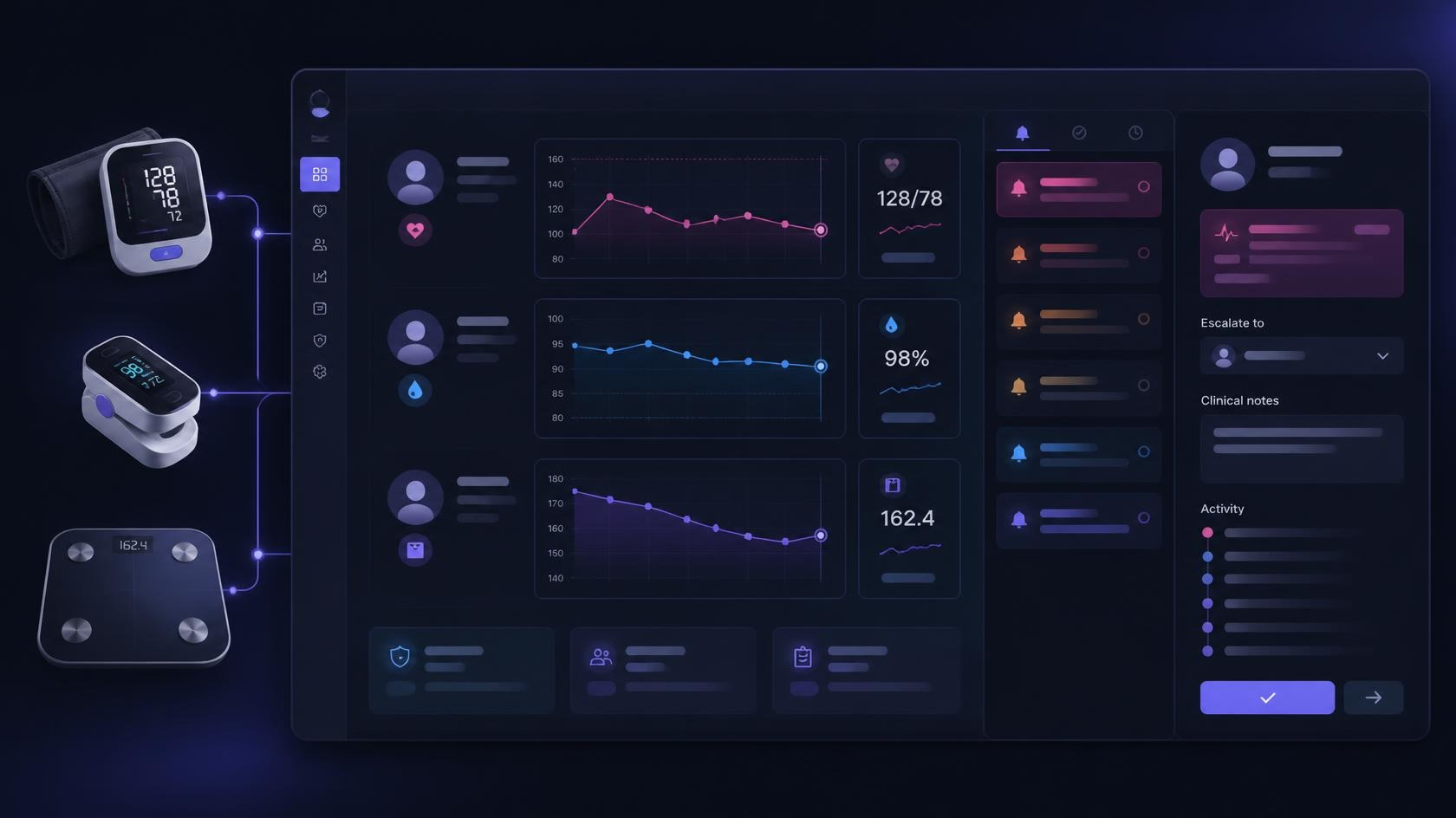
Remote Patient Monitoring Operations Console
A HIPAA-conscious remote patient monitoring console that ingests device readings, applies threshold rules, routes alerts to nursing staff, and escalates to clinicians with a full audit trail.
Read case study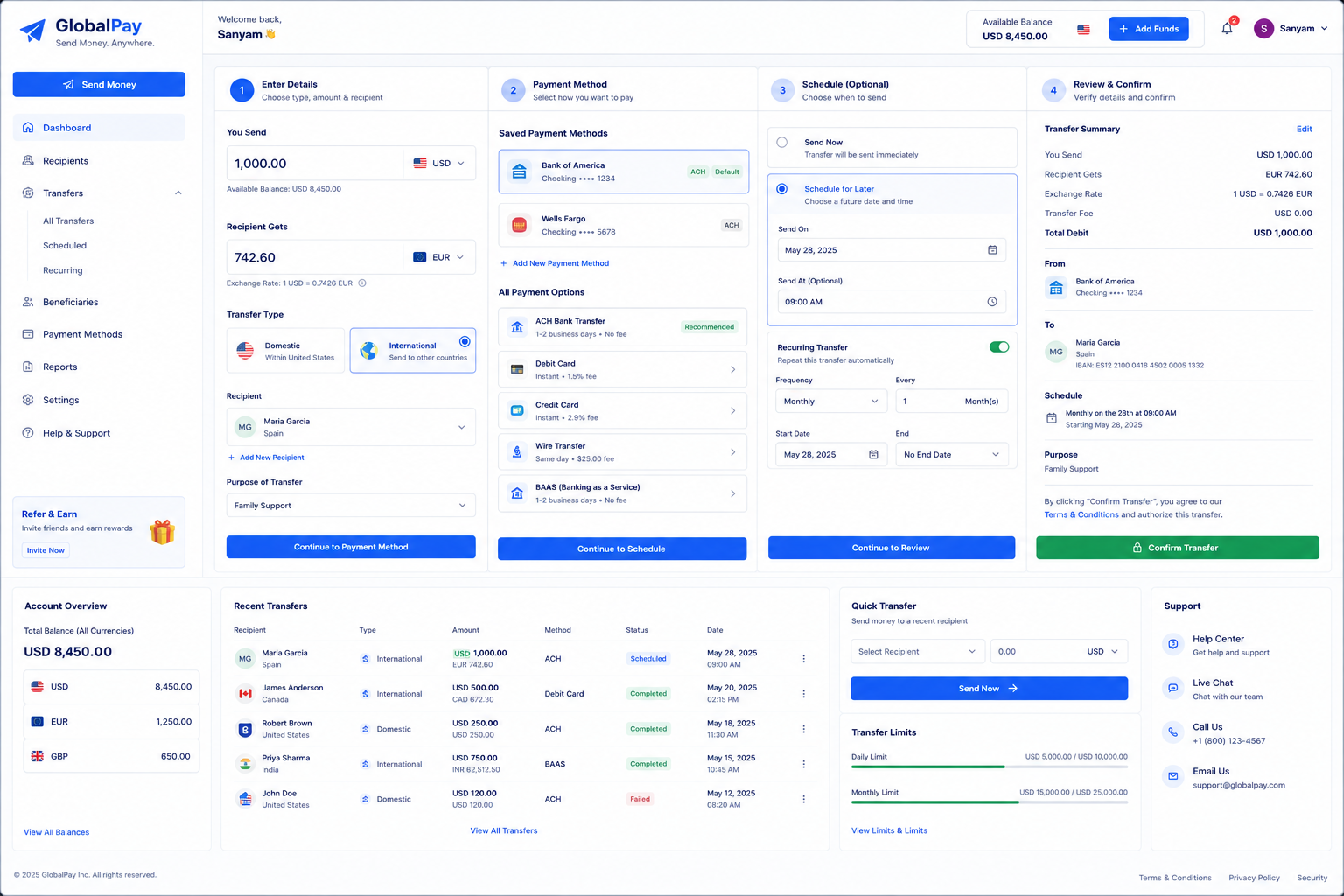
Global Payments & BaaS Platform
A cross-border payments and Banking-as-a-Service platform that orchestrates ACH, RTP, SWIFT, and regional rails for merchants and financial partners.
Read case study
Foreign Exchange Management Software
A treasury-grade FX platform for tracking rates, executing transactions, and managing multi-currency positions with automated settlement workflows.
Read case studyNeed a case study like this?
Client names stay confidential. Request fuller details under NDA, or talk through a similar workflow for your team.