Multi-Vendor Commerce Platform
A web and mobile commerce platform for vendor onboarding, shared inventory, sales, and rental operations with barcode-backed stock tracking.

Project overview
Multi-vendor commerce breaks down when each seller, warehouse, and rental desk keeps its own idea of what is in stock. Sales and rentals then compete for the same item, and lookup becomes a phone call.
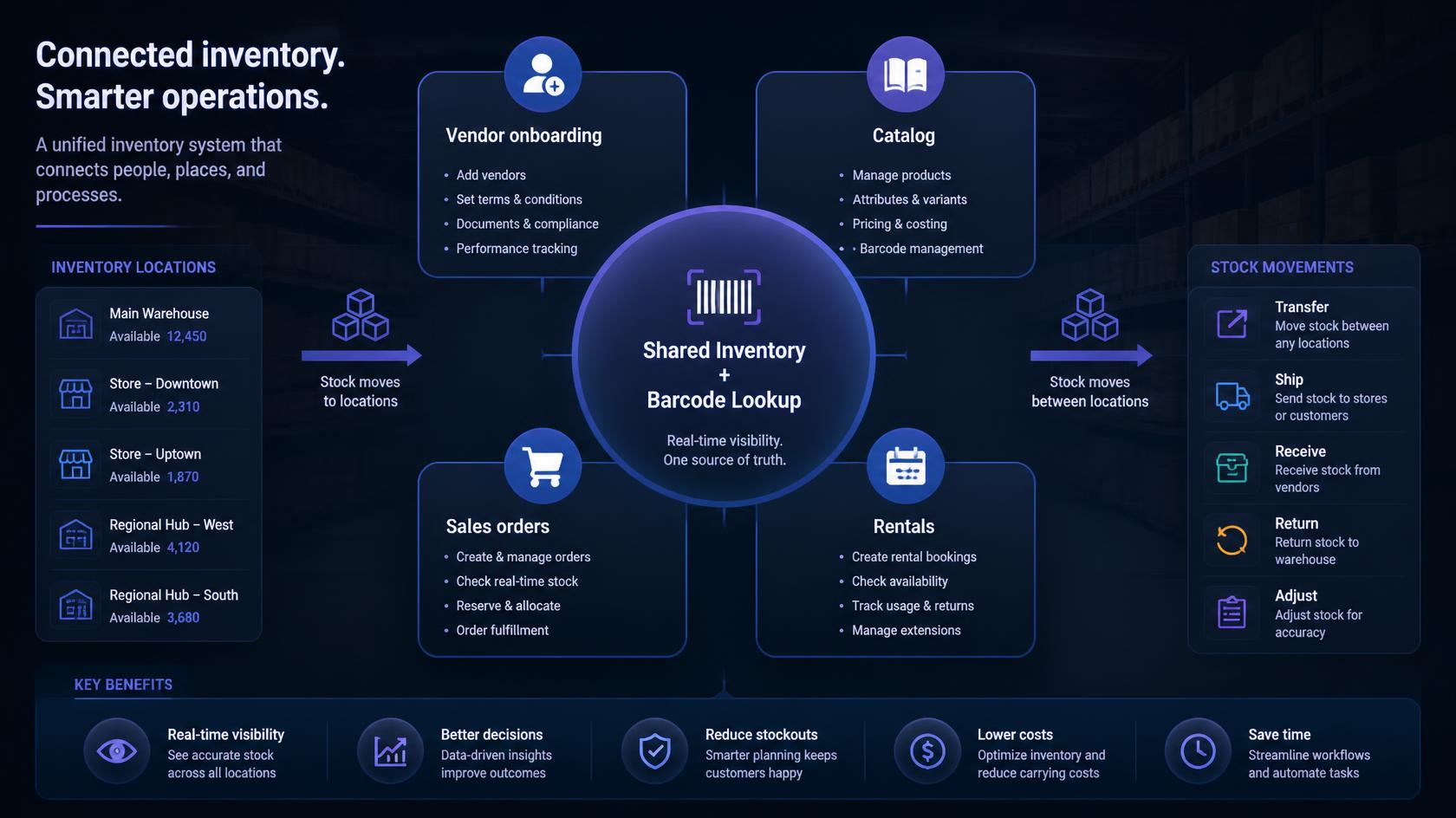
We built a web and mobile platform where vendor onboarding, shared inventory, sales, and rentals sit on one catalog. Barcode support on mobile makes stock tracking and product lookup fast on the floor, not just in an admin screen.
The system is for commerce businesses that need more than a simple storefront: multiple vendors, mixed sale and rental demand, and inventory that has to be trustworthy at the moment of the order — on desktop and on handheld devices.
The challenge
The client needed one system to manage multiple vendors, inventory, orders, and rentals without losing track of stock across locations. Separate tools made it too easy for a sale and a rental to claim the same item, and floor staff lacked a reliable mobile way to look up stock.
The solution
We built a multi-vendor commerce platform with web admin tools and mobile applications for floor operations — barcode lookup, shared inventory control, and streamlined order and rental workflows. Vendors onboard into one catalog, and stock updates flow through both sales and rental paths on every device.
What we built
How we approached it
Make inventory the source of truth
Sales and rentals were designed to read and write the same stock records, so availability is not a side spreadsheet.
Design for the floor, not only admin
Barcode lookup on mobile was included so staff can find a product and confirm stock without leaving the operational flow.
Ship web and mobile together
Admin and vendor workflows run on the web; scanning, lookup, and counter sales run on mobile apps that share the same inventory API.
Onboard vendors into one catalog
Vendor records, products, and fulfillment rules live together instead of each seller running a mini-store in isolation.
Keep orders and rentals on one path
Checkout and fulfillment share inventory checks, whether the transaction is a sale or a rental.
Examples from the workflow
These are the kinds of moments the system was designed to handle — not hypothetical product slides.
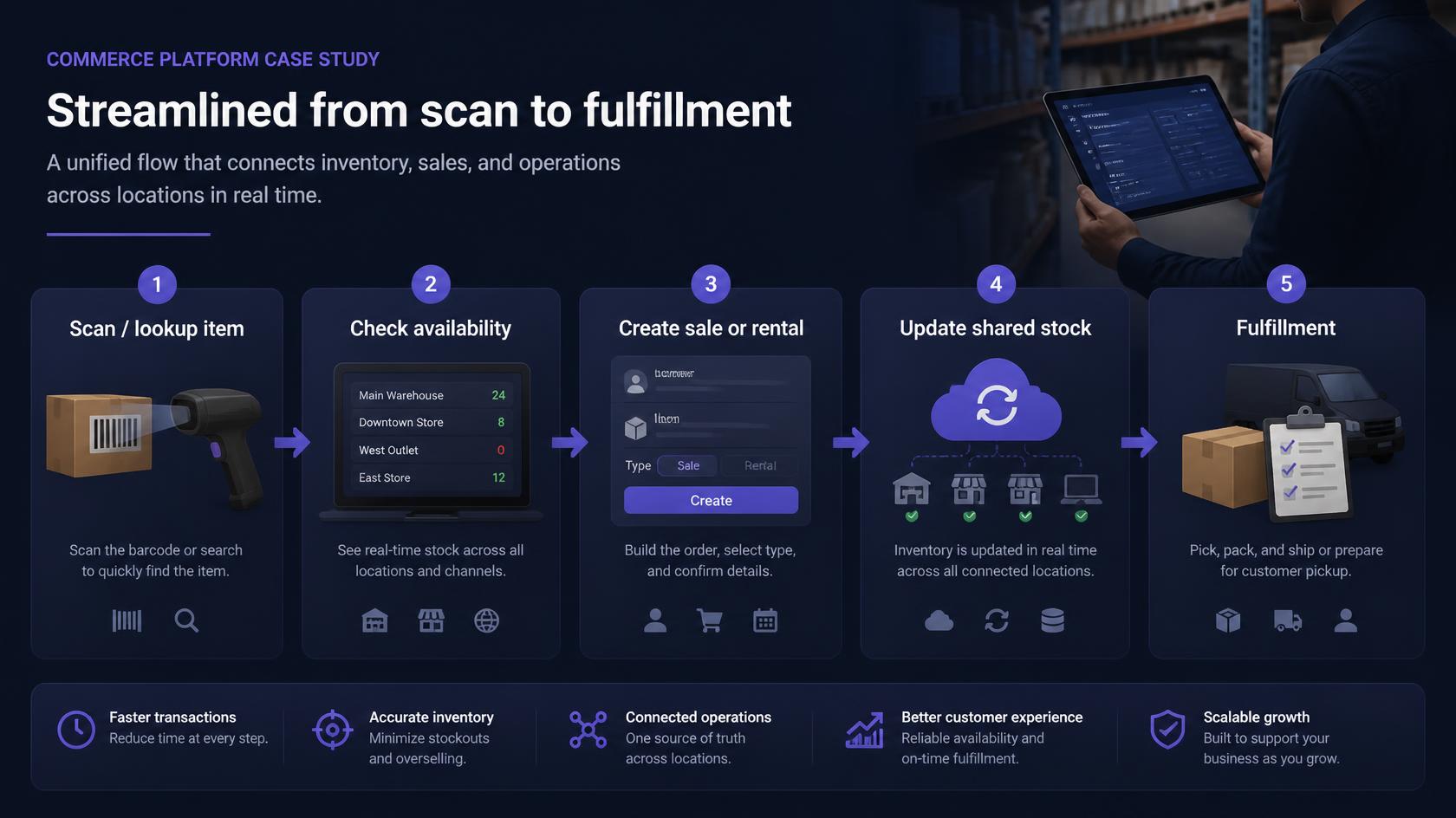
A rental does not oversell the last unit
When an item is reserved for rental, shared inventory reflects it before a sales order can take the same unit.
Barcode lookup during a busy counter moment
Staff scan from the mobile app, see vendor and stock context, and complete the order without a back-office detour.
New vendor live without a parallel catalog
Onboarding adds the vendor's products into the shared catalog and inventory rules rather than creating a second store.
Stack and delivery pieces
Outcomes
Questions this case study usually raises
What makes this different from a standard e-commerce store?
It is built for multiple vendors, shared inventory, and mixed sales and rental operations, with barcode-backed stock tracking on web and mobile — not just a single-catalog checkout page. In New vendor live without a parallel catalog, those details were treated as product requirements—not afterthoughts—so the workflow stayed usable for real operators. Discovery, phased delivery, and evaluation against real scenarios shaped what shipped. If you pursue a similar build, we start by mapping your equivalent constraints and success metrics. The case study is a reference for approach and outcomes; your implementation is tailored through scoping.
Does it include a mobile application?
Yes. We delivered iOS and Android apps for floor staff so barcode lookup, stock confirmation, and counter sales work on the go while admin and vendor tools stay on the web. For engagements like New vendor live without a parallel catalog, we confirm fit during discovery against your stack, volume, and compliance constraints rather than assuming every environment matches the case study one-to-one. Integrations, permissions, and review gates are planned explicitly. A pilot usually proves the highest-value path first, then expands once quality and adoption are clear. That keeps delivery practical and measurable.
Does it support rentals as well as sales?
Yes. Rental workflows were designed alongside sales so both consume the same inventory picture. For engagements like New vendor live without a parallel catalog, we confirm fit during discovery against your stack, volume, and compliance constraints rather than assuming every environment matches the case study one-to-one. Integrations, permissions, and review gates are planned explicitly. A pilot usually proves the highest-value path first, then expands once quality and adoption are clear. That keeps delivery practical and measurable.
How does barcode support help?
Staff can look up products and confirm stock quickly from mobile during real operations, which is where multi-vendor inventory usually slows down. In practice for New vendor live without a parallel catalog, those rules are encoded in the workflow with logging so operators can see what occurred and intervene when needed. Edge cases are designed deliberately rather than left to improvisation. After launch, failure patterns feed iteration—knowledge updates, routing changes, or model/evaluation improvements. The operating model is meant to stay visible and supportable for your team.
Can vendors be onboarded into the same catalog?
Yes. Vendor onboarding, catalog control, and inventory share one platform instead of each seller keeping a separate stock list. For engagements like New vendor live without a parallel catalog, we confirm fit during discovery against your stack, volume, and compliance constraints rather than assuming every environment matches the case study one-to-one. Integrations, permissions, and review gates are planned explicitly. A pilot usually proves the highest-value path first, then expands once quality and adoption are clear. That keeps delivery practical and measurable.
More case studies
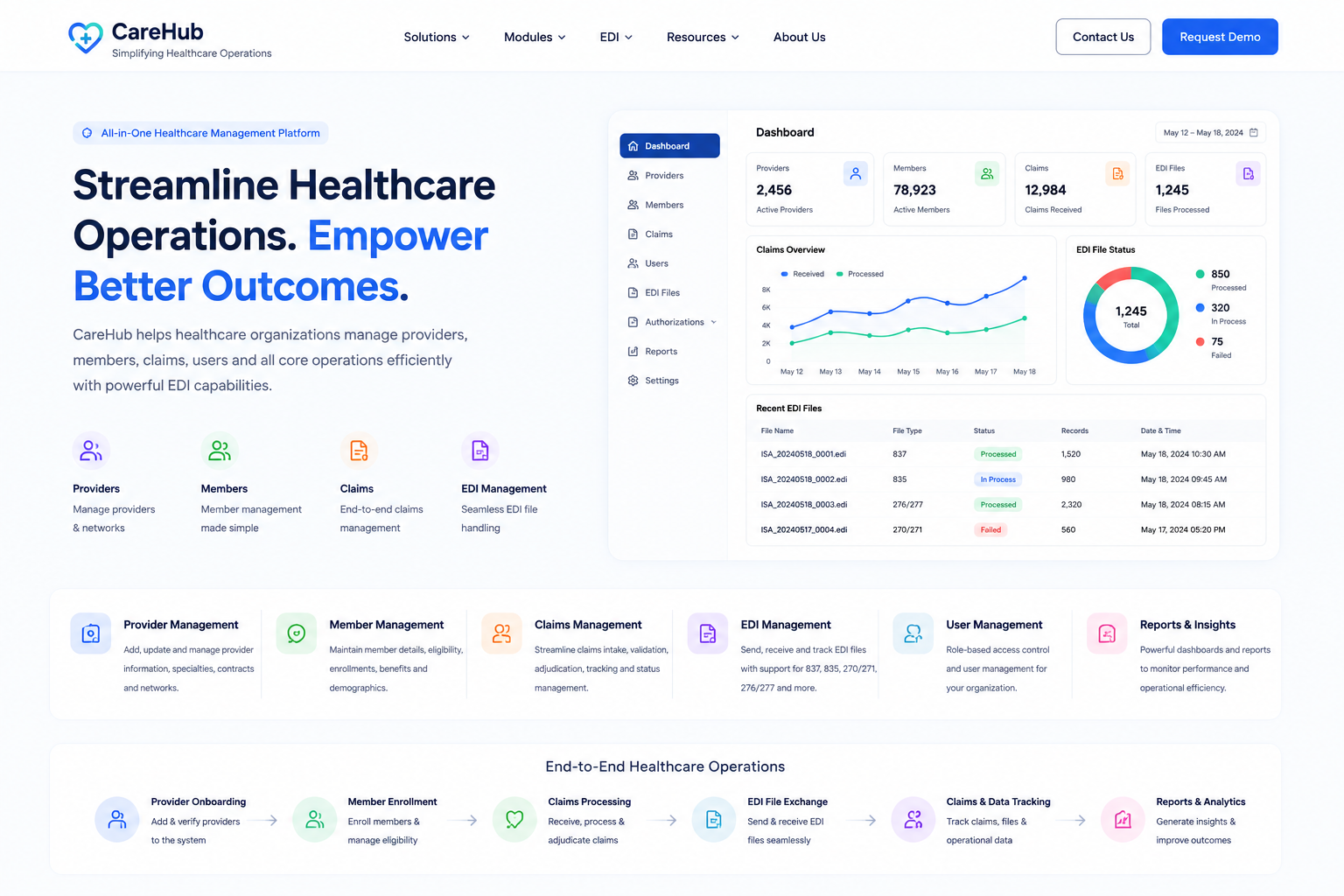
Healthcare Claims Management Platform
A HIPAA-ready healthcare operations platform that centralizes vendor data, claims processing, member administration, and plan management for U.S. healthcare teams.
Read case study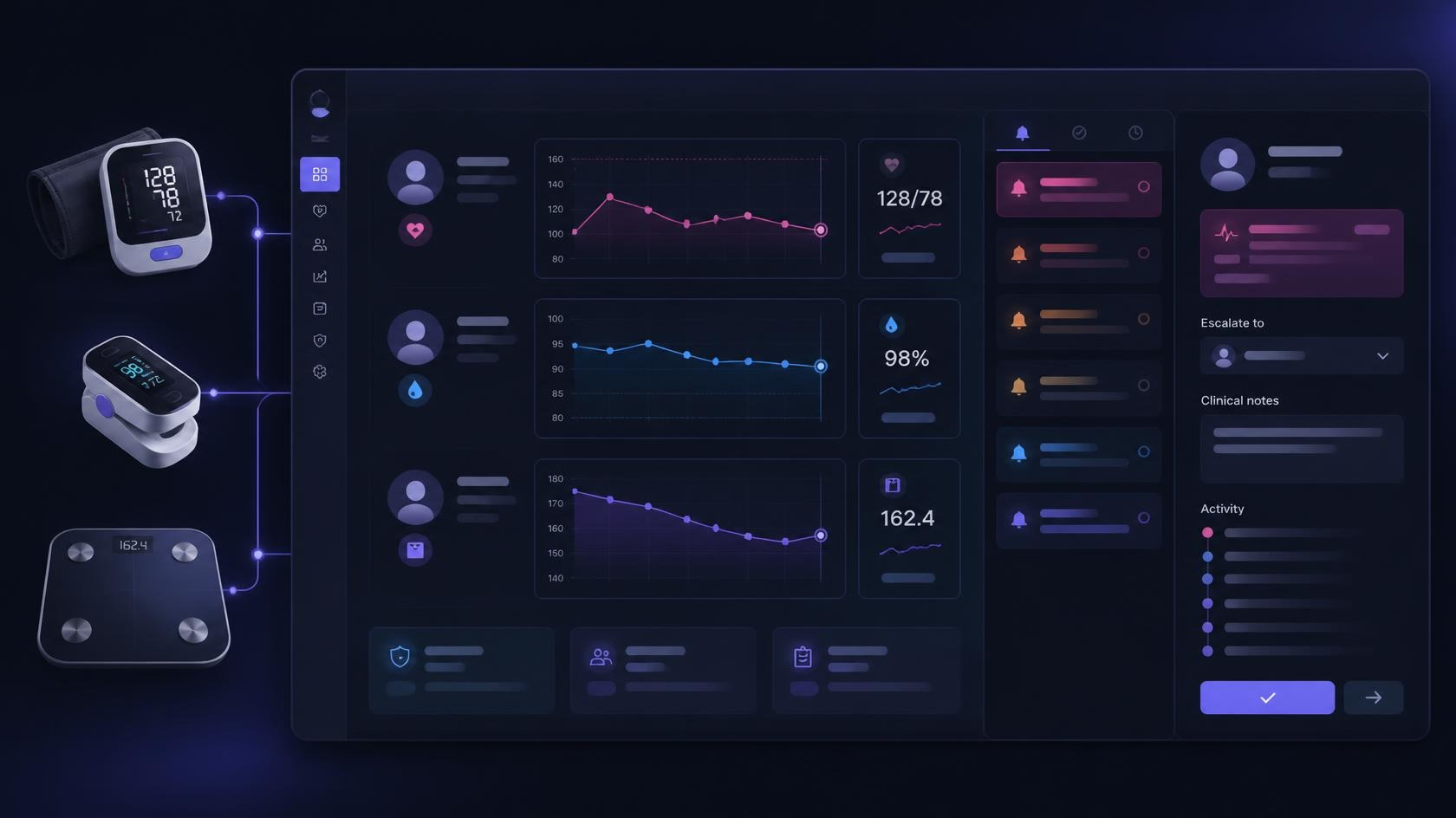
Remote Patient Monitoring Operations Console
A HIPAA-conscious remote patient monitoring console that ingests device readings, applies threshold rules, routes alerts to nursing staff, and escalates to clinicians with a full audit trail.
Read case study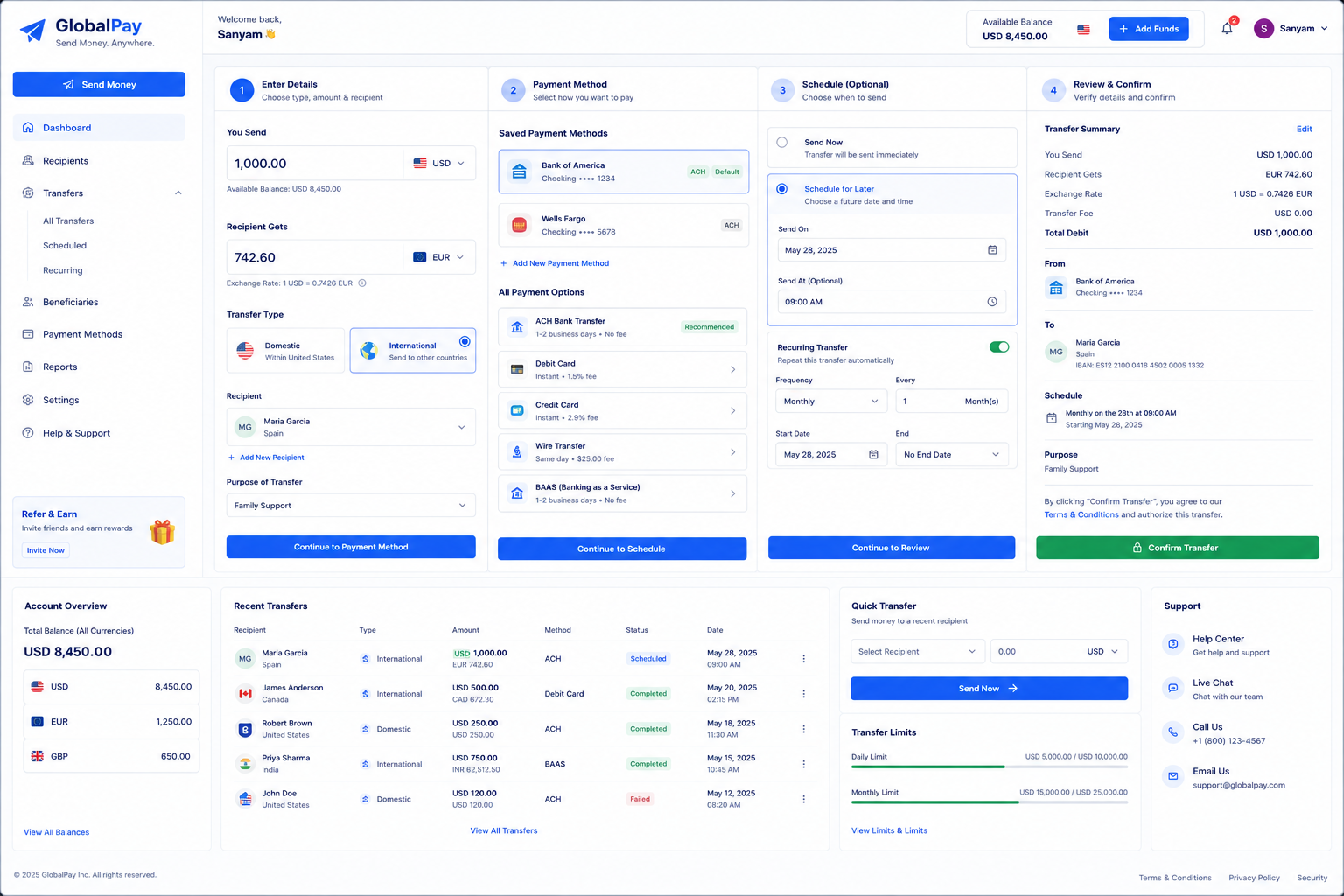
Global Payments & BaaS Platform
A cross-border payments and Banking-as-a-Service platform that orchestrates ACH, RTP, SWIFT, and regional rails for merchants and financial partners.
Read case studyNeed a case study like this?
Client names stay confidential. Request fuller details under NDA, or talk through a similar workflow for your team.