Multi Agent System
A collaborative AI system where specialized agents plan, execute, and review work together on complex business workflows.

Project overview
One model asked to research, decide, execute, and check its own work will skip a step. Complex operations need roles, handoffs, and review — the same way a team does.
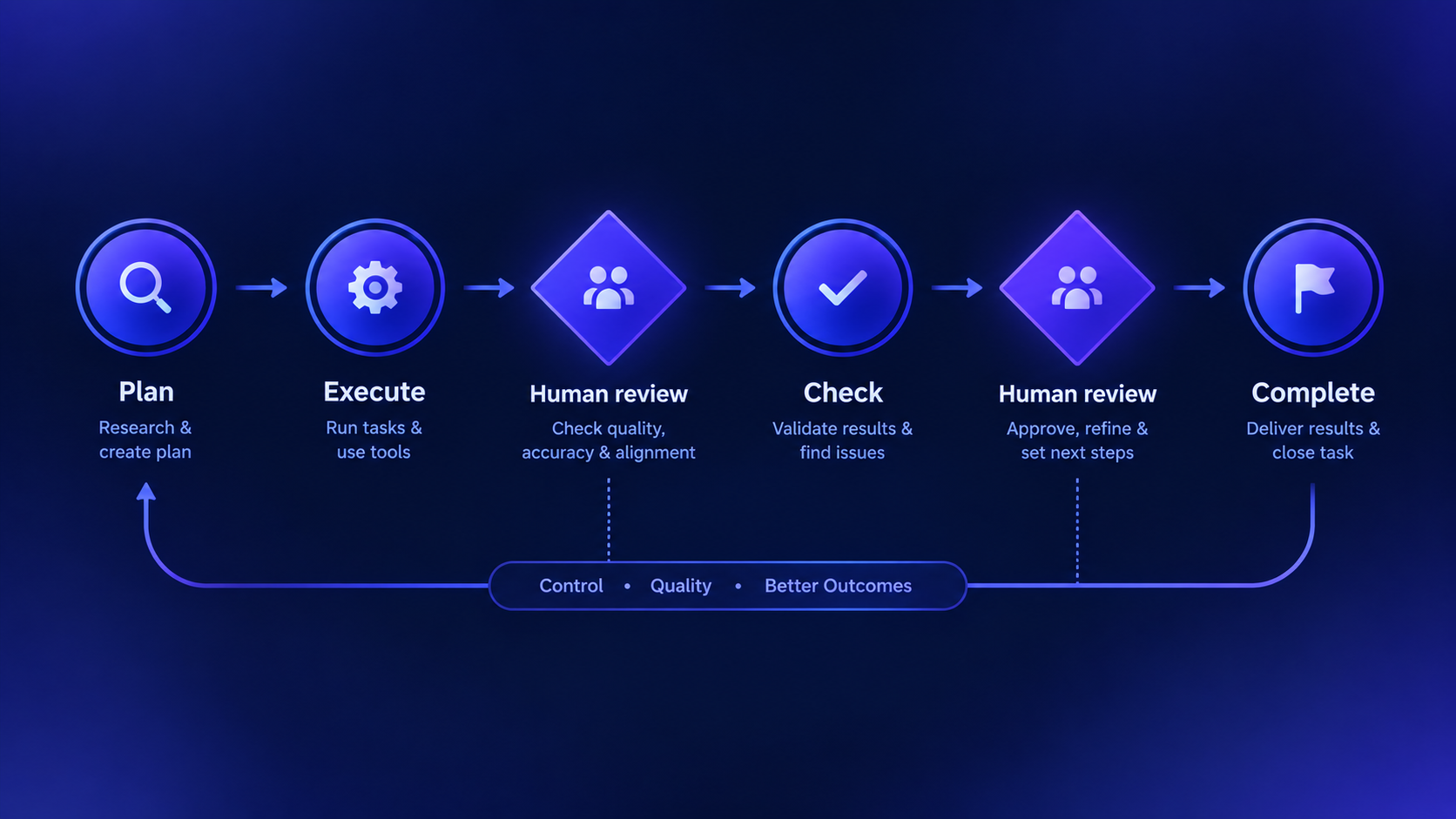
This multi-agent system splits work across specialist agents: planning, research, execution, and quality review. They share memory, pass tasks, and stop at human checkpoints when the risk is real.
The pattern is reusable. Once roles and evaluation exist, the same orchestration can run a different business workflow without turning it back into a single prompt.
The challenge
A single model was not enough for multi-step work that needed research, decision-making, execution, and quality checks in one flow. Errors compounded because the same agent was both doer and reviewer.
The solution
We designed a multi-agent system where specialist agents share context, hand off tasks, and complete complex workflows with clearer roles. Human-in-the-loop checkpoints sit between steps that should not run unsupervised.
What we built
How we approached it
Name the jobs
Each agent has a job a person would recognize: research, plan, execute, review.
Share memory on purpose
Handoffs include the context the next agent needs, not a dump of the entire transcript.
Put humans on the expensive mistakes
Checkpoints are placed where a wrong action is costly, not on every token.
Measure completion, not chatter
The system is evaluated on whether the workflow finished correctly, not on how long the agents talked.
Examples from the workflow
These are the kinds of moments the system was designed to handle — not hypothetical product slides.
Research then act
A research agent gathers sources, a planner sequences the work, and an executor uses tools — with a reviewer checking the output.
Internal operations chain
A multi-step ops process is split so no single agent both changes a record and marks the change as correct.
A human approves a high-impact step
The workflow pauses for review before an irreversible action, then continues with the decision attached.
Stack and delivery pieces
Outcomes
Questions this case study usually raises
Why use multiple agents instead of one larger model?
Complex work needs separated roles. Research, execution, and review fail more often when one model is asked to do all three without a handoff. In A human approves a high-impact step, those details were treated as product requirements—not afterthoughts—so the workflow stayed usable for real operators. Discovery, phased delivery, and evaluation against real scenarios shaped what shipped. If you pursue a similar build, we start by mapping your equivalent constraints and success metrics. The case study is a reference for approach and outcomes; your implementation is tailored through scoping.
Can people still intervene?
Yes. Human-in-the-loop checkpoints are part of the architecture for steps that should not run unsupervised. For engagements like A human approves a high-impact step, we confirm fit during discovery against your stack, volume, and compliance constraints rather than assuming every environment matches the case study one-to-one. Integrations, permissions, and review gates are planned explicitly. A pilot usually proves the highest-value path first, then expands once quality and adoption are clear. That keeps delivery practical and measurable.
Is this only for research tasks?
No. The same orchestration pattern is used for multi-step operations, planning and execution chains, and internal copilots. That distinction matters for scoping A human approves a high-impact step: we align on users, boundaries, and non-goals during discovery so the build does not drift into unrelated platform work. Deliverables and success metrics follow that definition. If a lighter or different approach fits better, we say so before heavy engineering begins. Related screens and workflows in the case study show how the scope played out in practice.
What do you actually deliver?
Agent roles, workflow design, guardrails, evaluation, and a deployment path — not a demo of agents chatting with no business outcome. For engagements like A human approves a high-impact step, we confirm fit during discovery against your stack, volume, and compliance constraints rather than assuming every environment matches the case study one-to-one. Integrations, permissions, and review gates are planned explicitly. A pilot usually proves the highest-value path first, then expands once quality and adoption are clear. That keeps delivery practical and measurable.
AI Multi Agents
We build multi-agent systems where specialized agents handle research, decisions, execution, and quality checks in a structured workflow that can adapt to your business process.
View the solutionMore case studies
Voice Agent
Generative voice AI that understands spoken requests and responds in real time for natural, unscripted conversations.
Read case study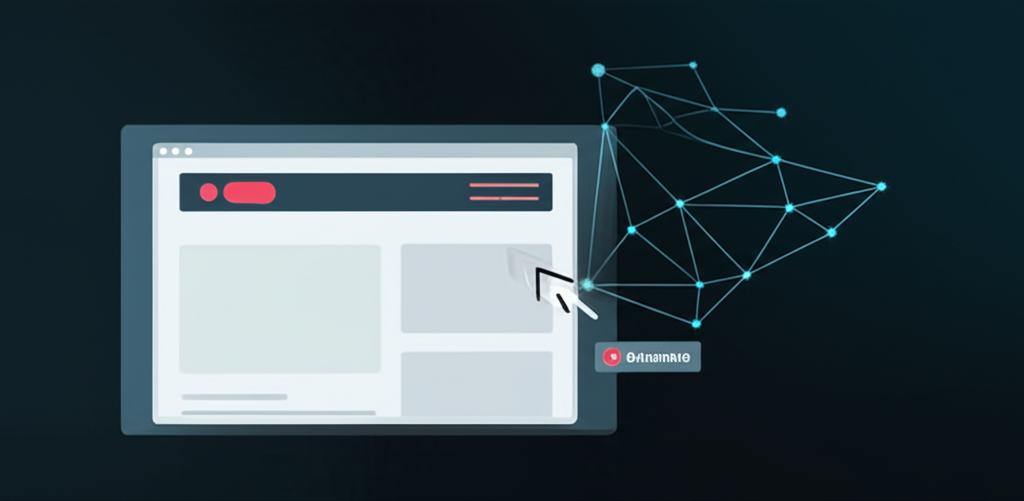
Browser Agent
An AI workflow agent that navigates web interfaces, completes multi-step browser tasks, and reduces repetitive operations work.
Read case study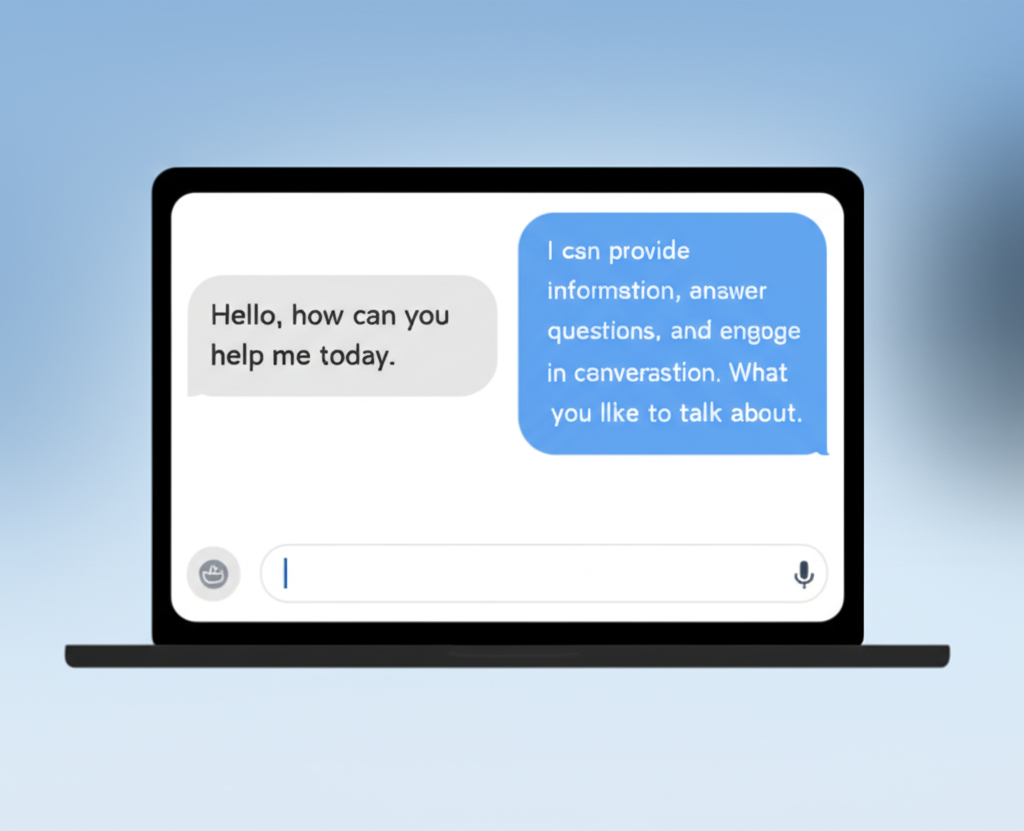
Advanced Chatbot
A generative AI chatbot that keeps conversation context, answers across domains, and delivers more human-like support experiences.
Read case studyNeed a case study like this?
Client names stay confidential. Request fuller details under NDA, or talk through a similar workflow for your team.