Smart Manufacturing Quality Control
An AI quality control platform that inspects production output, detects defects in real time, and helps teams reduce waste on the line.

Project overview
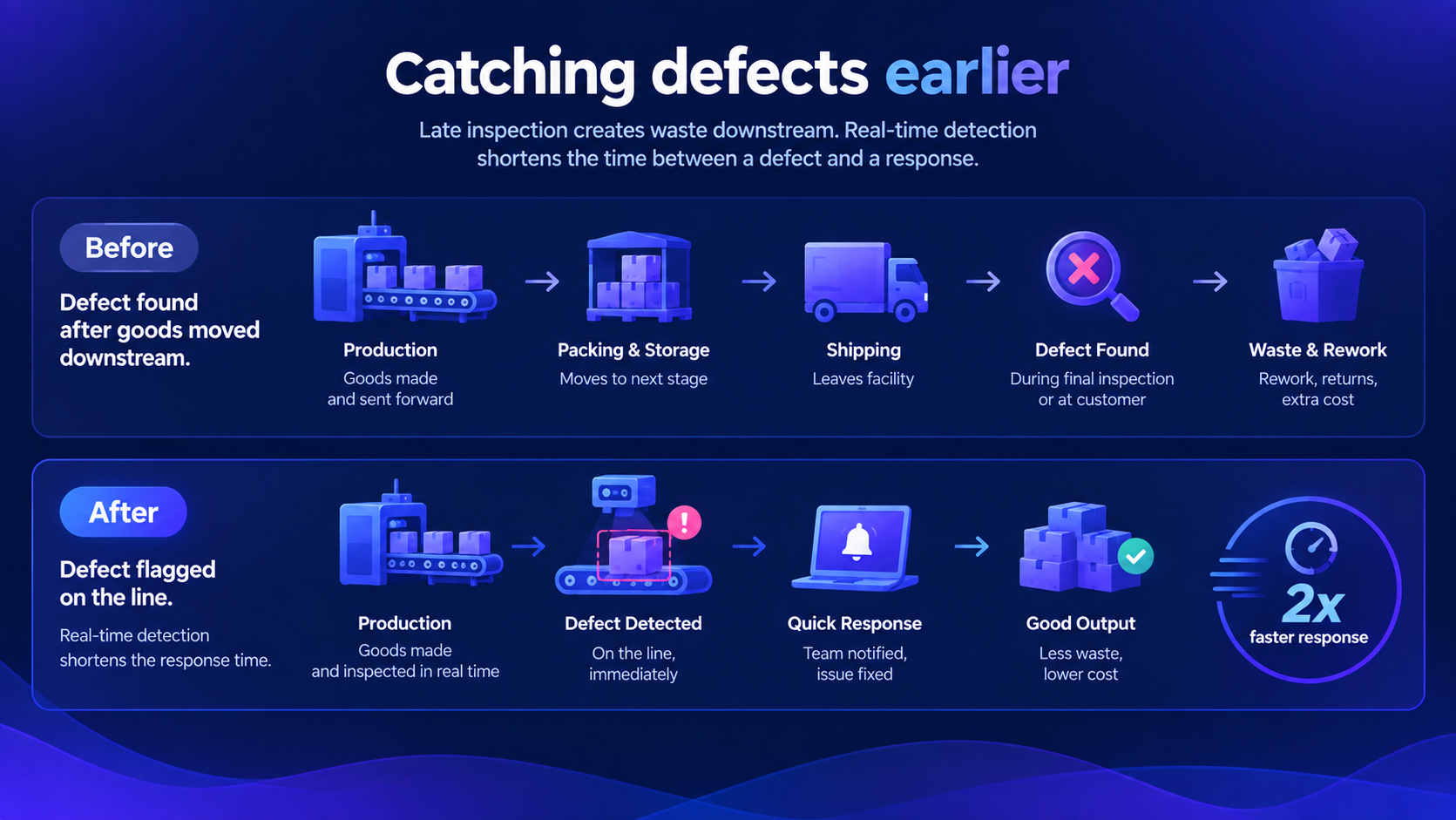
Quality problems are cheapest to fix at the moment they appear. They are expensive after product has moved downstream, been packed, or reached a customer.
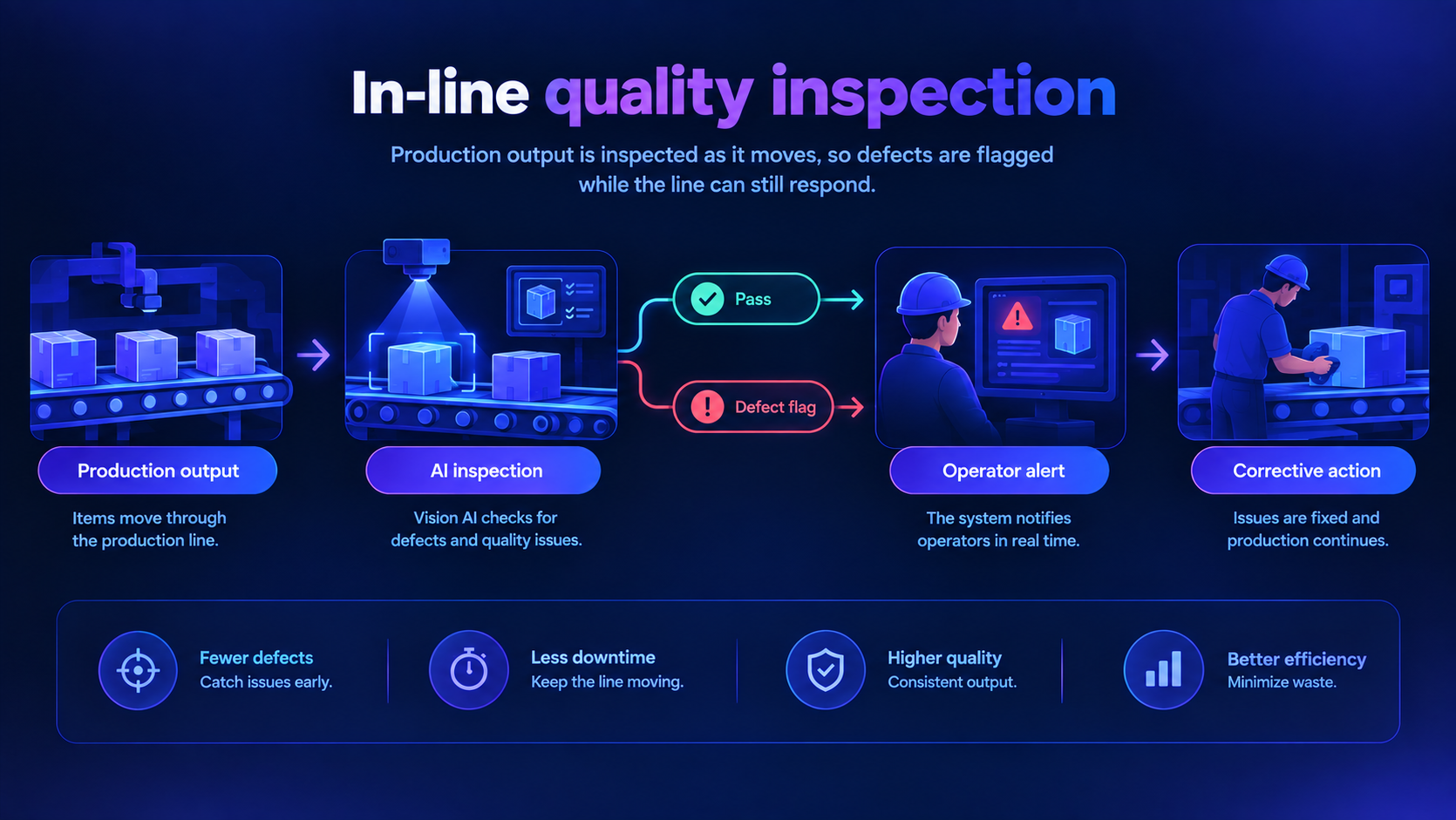
This AI quality control platform inspects production output in real time, flags defects, and gives operators a signal while the line can still respond. It is inspection as an operations loop, not a report that arrives after the shift.
Dashboards and alerts exist so quality and production share the same picture of what just happened on the line.
The challenge
Manufacturing teams needed faster defect detection so quality issues could be caught during production instead of after goods were already moving downstream. Late inspection created waste and slow corrective action.
The solution
We built an AI-driven quality control platform that inspects production output in real time, flags defects, and gives operators a clearer signal when the line needs attention. Alerts, scoring, and reporting sit on the same inspection events.
What we built
How we approached it
Inspect where the fault is born
The camera or data check sits on the line, not at the end of a long buffer.
Alert people who can still act
A defect flag is only useful if an operator sees it in time to intervene.
Score consistently
Quality views use the same events as the alerts, so reporting is not a second opinion.
Tune on real output
The inspection pipeline is tested against actual production, including the messy cases.
Examples from the workflow
These are the kinds of moments the system was designed to handle — not hypothetical product slides.
A defect caught before packing
The line is flagged while the unit is still in reach, instead of discovering the issue in a finished-goods audit.
A shift lead watching quality in motion
Dashboards show detection and response, not only a count of failed units at the end of the day.
A recurring fault pattern
Repeated flags become a process issue, not a pile of unrelated scrap tickets.
Stack and delivery pieces
Outcomes
Questions this case study usually raises
Is this visual inspection or process-data inspection?
The platform is built for AI inspection of production output — typically visual defect detection — with alerts and dashboards for the line. That distinction matters for scoping A recurring fault pattern: we align on users, boundaries, and non-goals during discovery so the build does not drift into unrelated platform work. Deliverables and success metrics follow that definition. If a lighter or different approach fits better, we say so before heavy engineering begins. Related screens and workflows in the case study show how the scope played out in practice.
Does it replace quality inspectors?
It flags defects earlier so inspectors and operators spend time on response and process issues, not on finding problems after the fact. In A recurring fault pattern, automation is designed to remove repetitive work and improve consistency while people retain ownership of judgment calls, exceptions, and final accountability. Success is measured in faster cycle time and better context for humans—not in removing the function entirely. Guardrails and review paths are part of the operating model so the system stays trustworthy after launch.
What does 'real time' mean here?
Inspection runs as output is produced, so a defect can be flagged while the line can still stop, divert, or correct. For engagements like A recurring fault pattern, we confirm fit during discovery against your stack, volume, and compliance constraints rather than assuming every environment matches the case study one-to-one. Integrations, permissions, and review gates are planned explicitly. A pilot usually proves the highest-value path first, then expands once quality and adoption are clear. That keeps delivery practical and measurable.
Can this be adapted to another line or product?
Yes. The inspection pipeline, alerting, and reporting pattern is reusable; models and thresholds are tuned to the actual output. For engagements like A recurring fault pattern, we confirm fit during discovery against your stack, volume, and compliance constraints rather than assuming every environment matches the case study one-to-one. Integrations, permissions, and review gates are planned explicitly. A pilot usually proves the highest-value path first, then expands once quality and adoption are clear. That keeps delivery practical and measurable.
AI Quality Inspection
We build quality inspection systems that can analyze images or process data, detect anomalies, and surface issues before they become expensive problems.
View the solutionMore case studies
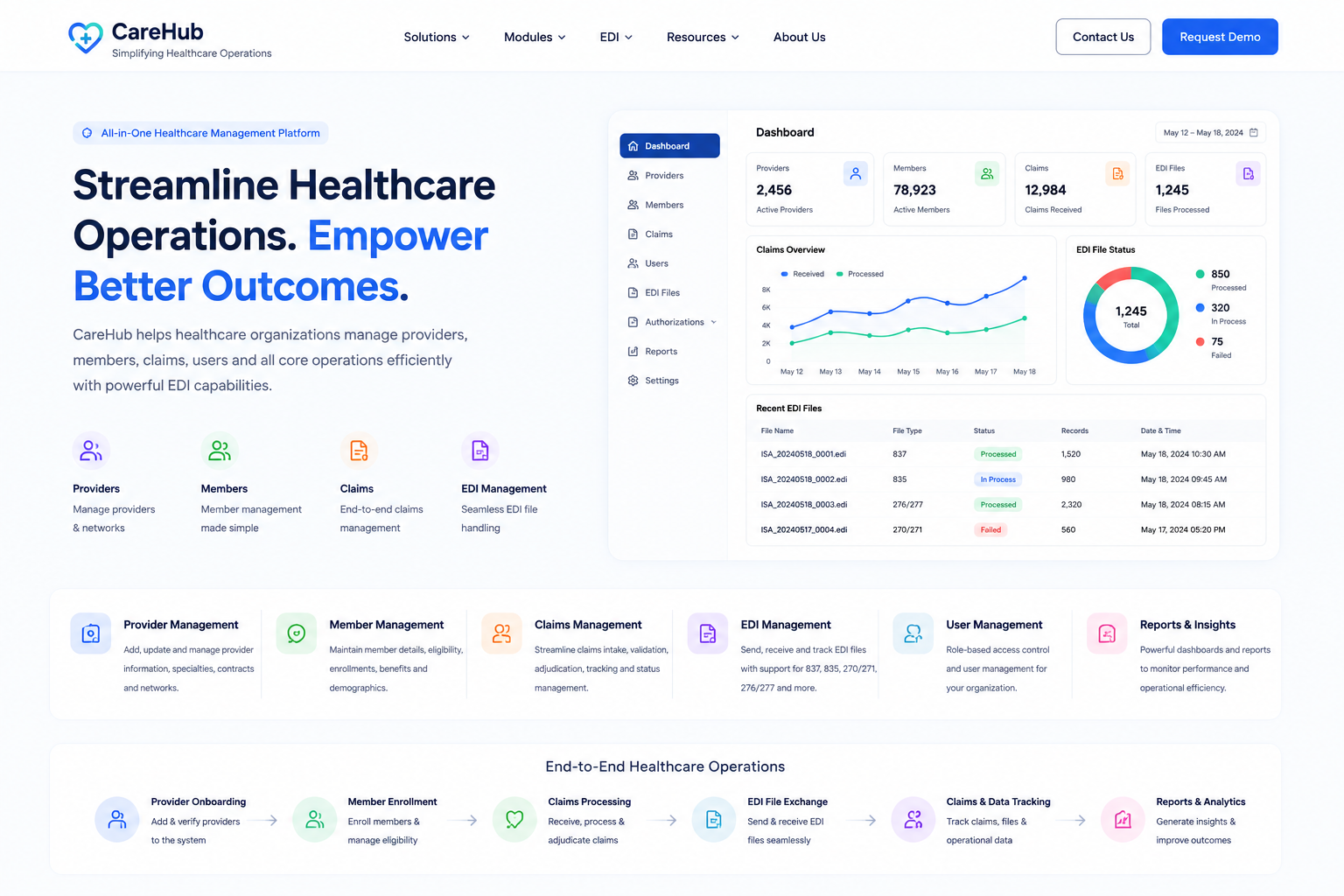
Healthcare Claims Management Platform
A HIPAA-ready healthcare operations platform that centralizes vendor data, claims processing, member administration, and plan management for U.S. healthcare teams.
Read case study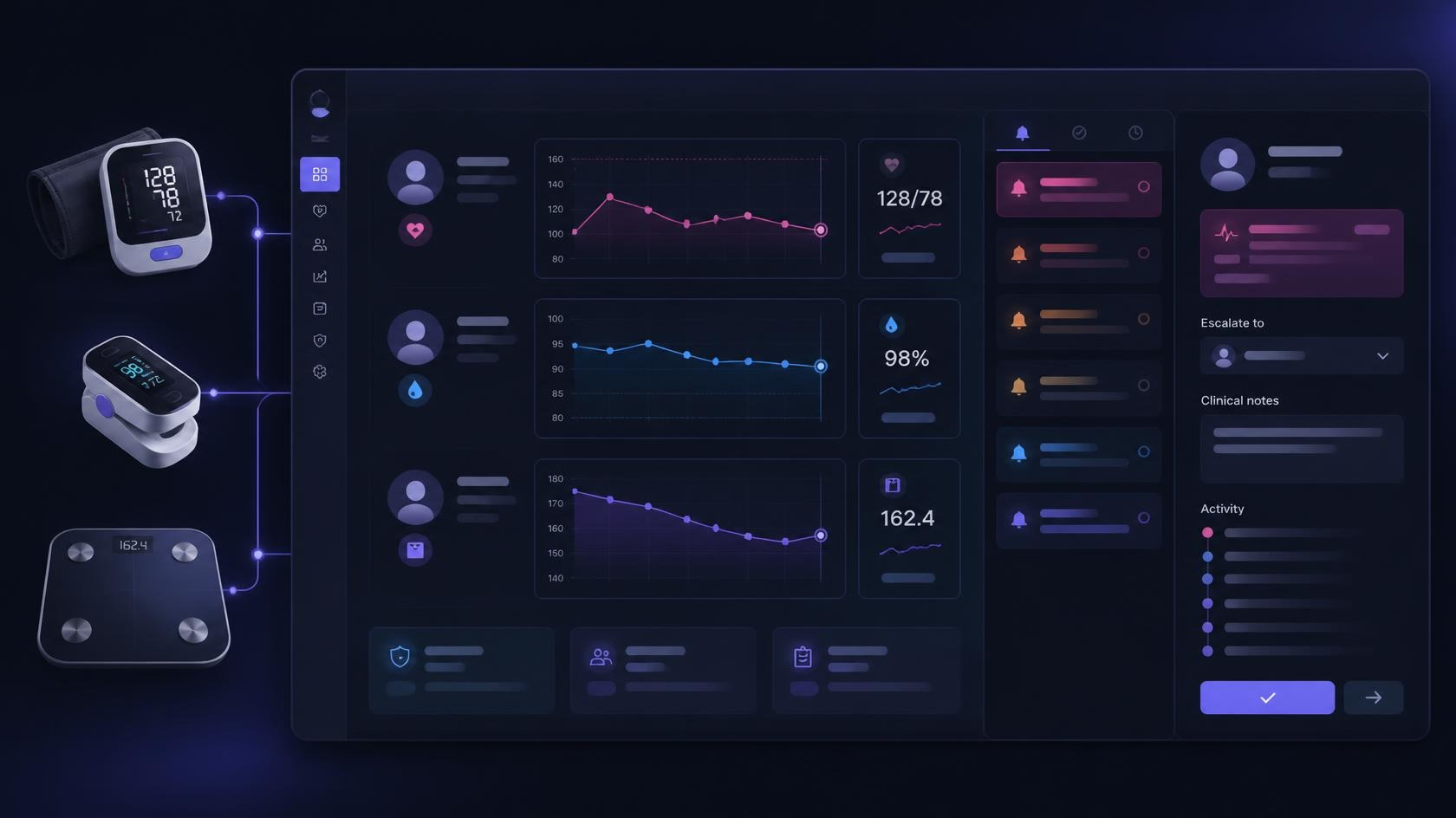
Remote Patient Monitoring Operations Console
A HIPAA-conscious remote patient monitoring console that ingests device readings, applies threshold rules, routes alerts to nursing staff, and escalates to clinicians with a full audit trail.
Read case study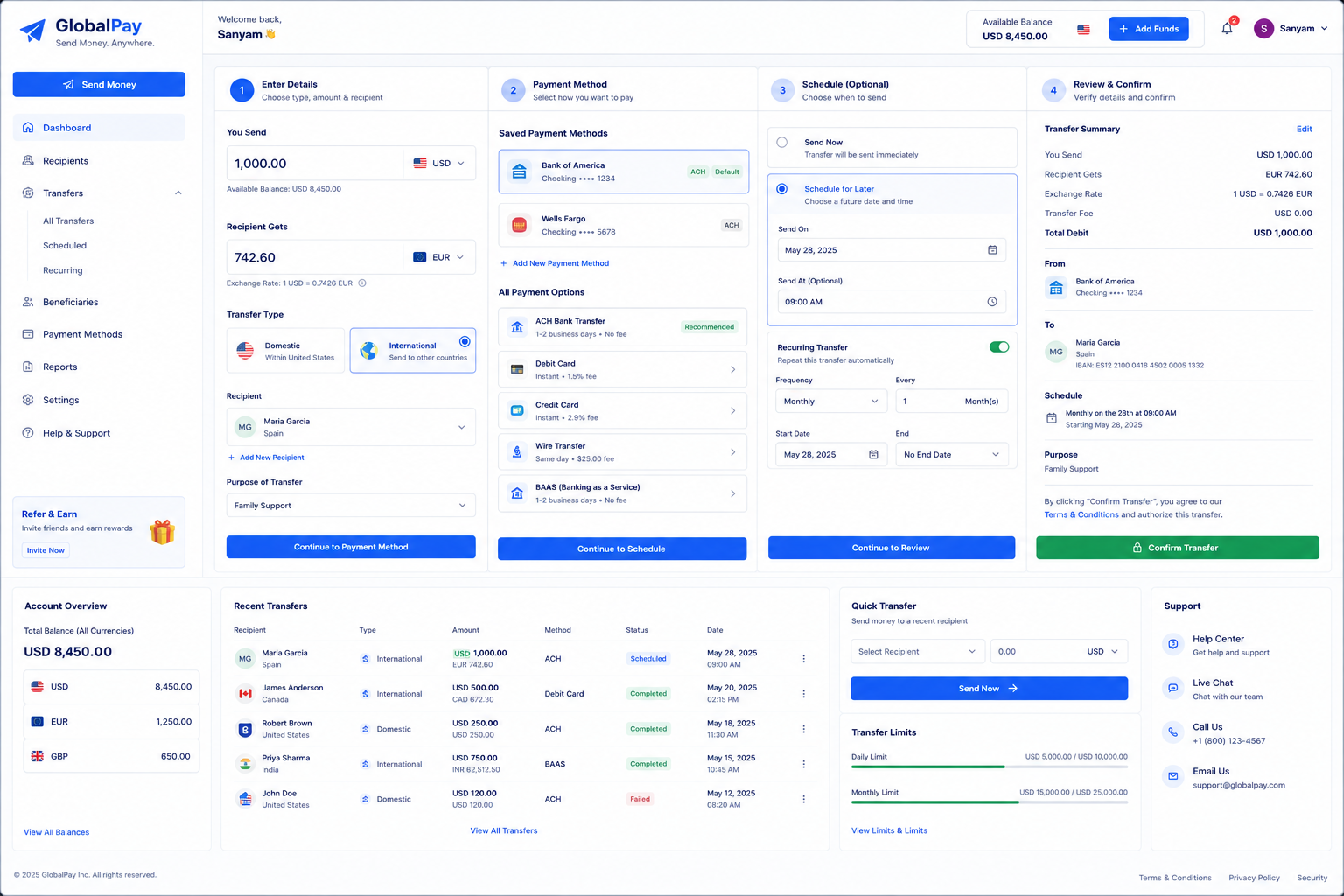
Global Payments & BaaS Platform
A cross-border payments and Banking-as-a-Service platform that orchestrates ACH, RTP, SWIFT, and regional rails for merchants and financial partners.
Read case studyNeed a case study like this?
Client names stay confidential. Request fuller details under NDA, or talk through a similar workflow for your team.